UPDATE: If you’ve come here for this, you might also be interested in a new post (October 1st 2024) about Jimmy Carter’s climate change actions. Happy birthday President Carter!
On this day, June 20, 1979, US President Jimmy Carter had 32 solar panels put on the White House.
It was organised by Dennis Hayes, who had been one of the co-ordinators of Earth Day in 1970, and then headed of Carter’s Solar Energy Research Institute
There is a brilliant blog post by Oliver Carpenter of the UK Science Museum about this here. See also Scientific American.
On this day in 1997, the cuddly-sounding but actually simply evil “Global Climate Coalition” ran the following newspaper advert, as part of the huge, well-funded and well-coordinated campaign to … (checks notes)… render human civilisation quite unlikely in the second half of the 21st century.
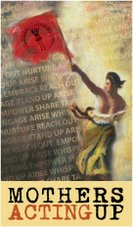
Exactly 12 years later, on June 19, 2009 there was a “Mothers Day of Action” in the US, as part of a push for a climate and energy act.
“On Friday, June 19th, 1Sky and groups like MoveOn, Green for All, Oxfam and others are calling for a national day of action to make the climate bill stronger. It’s a day for you to “get visible” in your community. Please invite your family, friends and neighbors to rally at your representative’s district office and make your voice heard loud and clear.
Your voice lets your representative know that there are concerned citizens — like you — who want a stronger bill to create millions of clean energy jobs and begin to tackle climate change. So now it’s time to get louder!…..
Why June 19th? Right now, several committees are working on this bill, and we expect a House floor vote by the end of June. This is the critical moment we’ve been working for in the House, so it’s time to make ourselves visible!
Why this matters.
We need to remember that the language of motherhood has been used a lot (I think it is a two-edged sword, tbh) – that this did not suddenly emerge in about 2018. Corporations and threatened industries can cloak themselves with the mantle of the underdog, of innocence, and go all DARVO too…
What happened next?
GCC shut up shop in 2002, “mission accomplished”.
MAU shut up shop in 2011 – mission not really accomplished. So it goes.
On this day in 1988 we were warned. Again.. With the Toronto conference on The Changing Atmosphere approaching, the WMO released a report, and scientists tried to alert the media.
This from the Associated Press-
“Things are going to change too fast,” scientist Michael Oppenheimer said as the World Meteorological Organization, a United Nations Agency, released a report last week on the climate change that could be triggered by the “greenhouseeffect.”
The report painted a picture of a global civilization heating its atmosphere in a myriad of ways, from burning fossil fuel to destroying tropical forests.
Those actions could force the average temperature up by 2 degrees Fahrenheit in the next three decades, the report says. That might not sound like much, but the scientistssay it would be enough to wreak havoc.
Such a temperature increase, for example, would cause the sea level to rise by 10 inches, bringing seawater an average of 83 feet inland, according to Oppenheimer.
“The potential for economic, political and social destruction is extraordinary,” said biologist George Woodwell.
‘Greenhouse Effect’ Could Trigger Flooding, Crop Losses, Scientists Say The Associated Press June 13, 1988
Why this matters.
We knew. Never forget that we knew.
What happened next?
We did nowt, unless you count toothless treaties and wishful thinking as action. Personally, I don’t.
On this day, 25 June, 1997, (25 years ago), the Clinton Administration was making life a little difficult for Prime Minister John Howard, who was sending emissaries around the world in an effort to find allies for his “Australia should get an opt out from this Kyoto thing” position.
According to Johnston and Stokes (1997)
“As late as June 1997, the US Ambassador to Australia, Ms Genta Hawkins Holmes, stated that the US would seek “binding, realistic and achievable” targets at Kyoto; she claimed that Australia should make greater use of renewable energy sources and improve its “relatively inefficient use of hydrocarbon energy.”
Johnston, W.R. and Stokes, G. 1997. Problems in Australian Foreign Policy: January- July 1997. Australian Journal of Politics and History, Vol.43(3), pp.293-300.
See also – “Shared Values Drive US-Australia Alliance”. The Australian, 12 June 1997:
“Ambassador Holmes Gives Elementary Warning on Warming”, Sydney Morning Herald, 12 June 1997.
Why this matters.
Australian federal governments have usually played a spoiling role in international negotiations (at the behest of powerful fossil fuel companies)
What happened next?
Australia, although diplomatically isolated, got a sweet sweet deal at Kyoto (via good luck and dummy spits).
And then refused to ratify. It was helped in this, enormously, by the selection of George W. Bush as President in 2000.
On this day, June 10, 1986, climate scientist Robert Watson told United States Senators the grim news…
“I believe global warming is inevitable. It is only a question of the magnitude and the timing “
The context was that in October 1985 there had been a crucial meeting of scientists in Villach, Austria. It had been sponsored by the World Meteorological Organisation, the United Nations Environment Program and the ICSU. The scientists had realised that predicted warming was likely to come harder and faster than they had been assuming. They started alerting politicians who were willing to listen (some of whom had already been engaged). Crucially, this included Republican senators (the party had completely swigged the Kool Aid yet).
“More members of Congress became interested in climate change following Senate hearings of June 1986. In these hearings a NASA scientist, Robert Watson, testified that `I believe global warming is inevitable. It is only a question of the magnitude and the timing ‘(SCEPW, 1986b, p. 22). The statement was picked up by major papers such as the New York Times and Washington Post briefly elevating what had been a relatively obscure scientific topic to national prominence. Administration officials testified before the Senate committee the next day. In general, the officials from EPA, Commerce, NASA, State, and Energy tried to downplay the significance of Watson’s comments, which only served to bring them into sharper relief. Following the testimony of the administration officials Senator John Chafee summarized the hearings as follows: `It was the scientists yesterday who sounded the alarm, and it was the politicians, or the government witnesses, who put the damper on it’ (SCEPW, 1986b, pp. 183}184). Chafee’s comments were an accurate characterization of the developing relationship between many in Congress who sought to heed the scientists’ alarm and those in the executive branch who tried to dampen it.”
(Pielke, 2000: 16-7)
See also Washington Post retrospective in 2016 very very explicit issue linkage – Pomerance acting as policy entrepreneur linking issues, at behest of Curtis Moore- see Nathaniel Rich Losing Earth
Why this matters
Good to know the scientists were speaking out before the magic years of 1988.
And that the administration was trying to gag them.
Useless, but good.
What happened next?
The issue stopped being so easily containable in the summer of 1988.
But the policy – of a global treaty – that was fought over, obviously. And as Leonard Cohen warned us “everybody knows the war is over, everybody knows the good guys lost.”
On this day, 25 years ago, (June 8th 1997) US business interests went very public in their ongoing campaign against both domestic legislation but also international agreements on climate change.
The background, quickly – by 1989 US business interests were pushing back hard against (some) politicians concern about “the greenhouse effect.” They created a front group, with the typically misleading name “The Global Climate Coalition” to slow down (or ideally, from their perspective, stop) moves towards putting a price on carbon dioxide, encouraging renewables etc. They rendered the UNFCCC largely toothless, and they’d killed off President Clinton’s proposed BTU tax. But by 1997, pressure was growing. A big international meeting was to be held in December 1997, in Kyoto, at which rich countries were supposed to come up with plans not merely to stabilise emissions, but actually reduce them.
On 8 June 1997, the Business Roundtable sponsored full-page advertisements in the US press signed by 130 CEOs, arguing against mandatory emissions limitations at the forthcoming Kyoto conference. Eighty Business Roundtable members did not endorse the advertisements, however. Monsanto had led an unsuccessful effort to draft an alternative text, which acknowledged that sufficient scientific evidence had accumulated to warrant concern and industry’s engagement in developing precautionary measures. This dissenting view was brought to President Clinton’s attention at the June 1997 meeting of the President’s Council of Advisers for Science and Technology (PCAST). According to Jon Holdren, Harvard scientist and chair of the PCAST panel on energy, the President’s awareness of the minority industry faction had significant political ramifications: ‘We actually did get the President off the dime at that meeting. He mobilized an interagency task force, and started a process which eventually converged on a set of policy recommendations for Kyoto.’
Splits within the business front (you go, Monsanto, you cuddly treehuggers you!) meant that President Clinton had a little more wiggle room. For what THAT was worth. It’s worth pondering that, by the way – this often happens – different businesses/sectors, with different interests and vulnerabilities, perceive the best course of action differently. Trade associations/business groupings are often sites for those conflicts.
What happened next?
We shall come back to the Byrd-Hagel resolution soon… Kyoto got agreed, and signed. The US and Australia pulled out before ratifying. It became international law because the Russians wanted into the WTO. It was toothless, and not replaced at Copenhagen. Then in Paris… oh, blah blah blah. The. Emissions. Have. Kept. Climbing.
So, a slightly different take on “All Our Yesterdays” – I will look at three events that occurred on June 4, but, as per the title, across seven years. These nicely summarise the arc of concern, hedging to effective resistance to action.
First up – in the first flush of newfound concern about The Environment, a “get together” when such satellite link-ups were relatively rare (but by no means unheard of).
Anon, 1989. Environment focus of global TV show. Canberra Times, 4 June p. 3.
SYDNEY: Australians play a part in a television program on the environment to be seen live in almost 100 countries today. Our Common Future, based in New York, will bring celebrities and world leaders together to spearhead the push towards environmental awareness.
The New York Times was lukewarm at best –
The oddest, most incoherent global television broadcast since the 1989 Academy Awards took place on Saturday afternoon. ”Our Common Future,” a five-hour program relayed to about 100 countries, was intended to create awareness of environmental problems and to urge global cooperation. For five hours, broadcast live from Avery Fisher Hall with material from the Soviet Union, England, Australia, Poland, Norway and Brazil, the program mixed musical performances with pro-environmental statements, a format akin to Live Aid, with which it shared a producer (Hal Uplinger) and director (Tony Verna).
Unlike Live Aid, the program was not a benefit, and it was less a live concert than a staged event; the audience was largely an invited one, and many of the performances were on tape. It was also considerably lower in star power than Live Aid, with Sting, Stevie Wonder, Elton John, Diana Ross, Joni Mitchell, R.E.M. and Kenny Loggins as its best-known names – although an African tawny eagle stole the show when it flew from the stage to roost on the second balcony.
And three years later, after a global treaty was “negotiated”, we have this –
“Australian signs the UNFCCC Roz Kelly (Minister for the Arts, Sport, the Environment and Territories), Australia signs UNCED climate change convention, media release, 4 June 1992.
Australia’s new Prime Minister, Paul Keating couldn’t be arsed to go (almost all other world leaders attended). Meanwhile, the Liberal National Party were already throwing shade –
“The opposition’s delegate to UNCED in 1992, for example, had criticized the Labor Government’s willingness to give away Australia’s sovereign rights and had emphasized the debilitative economic costs of reducing greenhouse gas emissions”.48
CPD, Senate, 4 June 1992, p. 3350.Matt McDonald, 2005 Fair Weather Friend
And, sure enough, once they were in charge again, this –
Australian industry has applauded the Federal Cabinet’s decision yesterday to oppose a targets and timetables approach to international climate change negotiations, made on the eve of World Environment Day today.
The Howard Government’s position effectively reaffirms that taken by the Keating government and its minister for the Environment, Senator John Faulkner.
The Minister for Foreign Affairs, Mr Alexander Downer, the Minister for the Environment, Senator Robert Hill, and the Minister for Resources and Energy, Senator Warwick Parer, said in a joint statement: “Australia will insist that the outcome of current international negotiations on climate change safeguards Australia’s particular economic and trade interests.”
Mr John Hannagan, chairman of the Australian Aluminium Council’s major policy group, said industry welcomed this statement, “reinforcing its no-regrets position as its negotiating stand at the forthcoming Geneva talks”.
Callick, R. 1996. Coalition backs industry on climate change. The Australian Financial Review, 5 June, p.2.
Why this matters.
These things follow a pattern – excited/exuberant “we can fix this,” (1989) then some sort of legislation (usually quite weak – 1992), then the pushback even from that…
What happened next?
We went through more waves of excitement, legislation, pushback. On a couple of occasions (2006-2009, 2018-2021). It is connected to what I call “the emotaycle.”
On this day, June 2nd, 1989 a good article with a bad title was published, summarising then current stances on “the greenhouse threat”.
Hansen, via his testimony almost a year previously, had become one target for those who were seeking to dismiss long-standing ‘greenhouse’ concerns.
Hansen had already been on the receiving end of an attempt to silence him by the Bush Administrations OMB, which had been revealed in May by Senator Al Gore. Hansen had been on the receiving end of this sort of pressure in 1981, and it would continue throughout the rest of his career. That is what happens when you have some inconvenient truths to tell…
Why this matters.
We need to remember that titles are rarely chosen by the author, and that just as you shouldn’t judge a book by its cover, an article might be more than what is suggested or (oftentimes) less – the so-called ‘bait and switch’.
What happened next?
Hansen kept doing what a decent scientist should do – researching, reporting on their findings, refusing to be shut up.
On this day, June 1, 1992, President George H.W. Bush, says that a habitable planet is an extremist demand.
“We cannot permit the extreme in the environmental movement to shut down the United States. We cannot shut down the lives of many Americans by going extreme on the environment.”
George Bush at UNCED, quoted in the Guardian, 1 June 1992 –
Q Is one of the problems with this, and the entire energy field, American lifestyles? Does the President believe that, given the amount of energy Americans consume per capita, how much it exceeds any other citizen in any other country in the world, does the President believe we need to correct our lifestyles to address the energy problem?
MR. FLEISCHER: That’s a big no. The President believes that it’s an American way of life, and that it should be the goal of policy makers to protect the American way of life. The American way of life is a blessed one.
Why this matters.
What is sacred is beyond discussion. It’s a classic “de-agendaising” technique, where if you push the issue, you cast yourself into the outer darkness.
What happened next?
The USA government ratified the UNFCCC at the Rio Earth Summit, and has spent the last 30 years rendering it meaningless, and basically doing the bidding of various fossil fuel lobbies (yes, it is more complicated than that, but not MUCH more complicated).
On this day, June 1st 1965, Tom Lehrer sang his song “Pollution” at the hungry i nightclub in San Francisco, as part of his “That was the week that was” gig.
Lehrer had basically “retired” from his tours, when asked to write topical songs for a weekly satirical TV show called “That was the week that was” (the songs were brought together in an album called “That Was The Year That Was”).
The song, picking up on growing concerns about air, water, noise and – well – everything – pollution, contains priceless lyrics such as
If you visit American city,
You will find it very pretty.
Just two things of which you must beware:
Don’t drink the water and don’t breathe the air!
YEAR: 1965 Lehrer singing “Pollution” at the hungry i