Forty four years ago, on this day, October 4th, 1982,
Koyaanisqatsi (English pronunciation: /koʊjɑːnɪsˈkɑːtsiː/[3]), also known as Koyaanisqatsi: Life Out of Balance, is a 1982 American experimental film directed by Godfrey Reggio with music composed by Philip Glass and cinematography by Ron Fricke.
The amount of carbon dioxide in the air was 341ppm. As of 2026, when this post was published, it is 430ppm. This matters because the more carbon dioxide in the air, the more heat gets trapped. The more heat, the more extreme weather events. You can make it more complicated than that if you want, but really, it’s not. Fwiw, I have a tattoo of the Keeling Curve on my left forearm.
The broader context was that through the 70s the hippies had begun to realise that they were in fact right, that you couldn’t have infinite growth on a finite planet, that it doesn’t profit a man much to gain the whole world if he loses his biosphere, and there were ongoing struggles, decolonization hadn’t been the panacea that the more optimistic among had hoped for.
Thespecificcontext was, well, you can read about Koyaanisqatsi here.
What I think we can learn from this is that artists and filmmakers and creatives, generally to use an ugly term, have known which way was up and have known that the hippies were largely right.
What happened next There was another film, Powaquaatsi, a few years later.
There keep being new films, which are going to change things, and then they don’t. These things don’t change things, and here we are.
On this topic, you might like these other posts on All Our Yesterdays
Xx
References
xx
You can see the chronological list of All Our Yesterdays “on this day” posts here.
What do you think? Does this pass the ‘so what?’ threshold? Have I got facts wrong? Interpretation wrong? Please do comment on this post, unless you are a denialist, obvs.
If you want to get involved, let me know.
If you want to invite me on your podcast, that would boost my ego and probably improve the currently pitiful hit-rate on this site (the two are not-unrelated).
Crawford Killian, author of the 1979 weather-apocalypse novel Icequake, kindly answers some questions. You can find him here – crof@bsky.social
Crawford Killian
1. A bit about who you are – where you grew up, education etc
I was born in New York City but grew up in North Hollywood, California until 1950. The family moved to Mexico City so my TV-engineer father could put a TV station (Televicentro) on the air. Four years later we were back in the States and I went through high school in Santa Monica. Then an undistinguished four years at Columbia, return to LA, two years in the US Army—and then, after a couple of dull jobs, my wife and I moved to Vancouver to get the hell away from the Vietnam War. I stumbled into college teaching, loved it, got my MA, and taught for 41 years before retiring in 2008.
2. Do you remember when/how you first heard that human activity might alter the planet’s climate, and what you thought (of course, in the 60s it was maybe dust, or carbon dioxide, warming/cooling)
Theories abounded in the 1960s and 1970s, and I ran across one theory circa 1974 from an Australian scientist who argued that the West Antarctic ice sheet’s own weight was melting its base and the lubricating effect could collapse the ice sheet into the Southern Ocean—where it would reflect enough sunshine back into space to trigger a new ice age. Yeah, I know. You had to be there.
3. How did you come to write Icequake? How long did it take?
I put aside the SF novel I’d been working on for years, did a lot of research, and wrote two drafts of Icequake. A lot of it got written in longhand during endless faculty association meetings. All told, it must have taken about three years. The second draft clicked—published in Canada, Commonwealth rights sold to Futura, a UK publisher, US rights to Bantam, who also wanted a sequel. That was Tsunami, very much the runt of my litter.
4. How was it received?
Futura put a lot of effort into publicizing Icequake, and for a few dizzy weeks in the summer of 1980 it was outselling The Thorn Birds. It didn’t get much critical attention in North America, and Bantam didn’t put a real effort into it, but it did all right. A number of people who’d worked in the Antarctic thought it was pretty accurate, which I was very relieved to hear.
5. Have you re-read it since?
I re-read it a year or two ago, and thought it held together pretty well. Of course I’d accelerated the collapse into a matter of weeks, not decades, but it still seemed plausible. Well, except for the concurrent collapse of the ozone layer and the earth’s magnetic field! I’d set the story in the near future of 1985, so of course much of the technology is really dated…not to mention the sociology. I had a couple of women working at New Shackleton Station, great rarities in those days, but not so much in the present.
6. What have you been doing, these last almost-fifty years since it was published.
I’ve had a very pleasant half-century, thanks! As a full-time college teacher I could pay the mortgage while also writing SF and fantasy novels (and nonfiction books, and writing a weekly column on education for a Vancouver daily paper, the Province). I was able to teach a course in writing fiction based on my own experience, and several of my students went on to publish their own novels. I had fun exploring ideas, but none of my later novels made the kind of money that Icequake did. In the mid-1990s I’d tried to break out of genre, but the market was changing. After a couple of unpublishable novels I packed it in. No regrets—I was lucky to break in when I did. Since then I’ve written hundreds of articles on all kinds of subjects—mostly for the Vancouver online magazine The Tyee (https://thetyee.ca/Bios/Crawford_Kilian/ ). A lot of those articles are on climate change.
7. Complete this sentence. “A knowledge of just how long we’ve known about the problem of carbon dioxide build-up gives us…” (you can say “nothing” or “perspective” or whatever!!) …gives us confirmation that we are very, very slow learners.
8. Anything else you’d like to say.
There really was a bit of debate in the 1970s about the trend of the climate, and I then had no particular opinion one way or the other. But by the early 80s it was clear we really were warming up, and I made passing reference to it in one or two of my later novels. Icequake went out of print long ago (though it’s still available as an e-book. But the science keeps confirming the book’s basic idea—that the Antarctic ice sheets, however vast they may seem, are transient conditions and subject to change.
Sixty four years ago, on this day, November 17th, 1961, the Twilight Zone got ecological…
Nov 17 1961 – “The Midnight Sun” is episode 75 of the American television anthology series The Twilight Zone, first shown in November, 1961.
Opening narration
The word that Mrs. Bronson is unable to put into the hot, still, sodden air is ‘doomed,’ because the people you’ve just seen have been handed a death sentence. One month ago, the Earth suddenly changed its elliptical orbit and in doing so began to follow a path which gradually, moment by moment, day by day, took it closer to the Sun. And all of man’s little devices to stir up the air are now no longer luxuries—they happen to be pitiful and panicky keys to survival. The time is five minutes to twelve, midnight. There is no more darkness. The place is New York City and this is the eve of the end, because even at midnight it’s high noon, the hottest day in history, and you’re about to spend it in the Twilight Zone. Whether explicitly nuclear or otherwise, the apocalypse was never far away [in the Twilight Zone]. “The Midnight Sun” was telecast on the day the U.S. consolidated its drive for “push-button warfare” with the first successful launching of a Minuteman missile from an underground silo. https://en.wikipedia.org/wiki/The_Midnight_Sun_(The_Twilight_Zone)
The amount of carbon dioxide in the air was 317ppm. As of 2025, when this post was published, it is 430ppm. This matters because the more carbon dioxide in the air, the more heat gets trapped. The more heat, the more extreme weather events. You can make it more complicated than that if you want, but really, it’s not. Fwiw, I have a tattoo of the Keeling Curve on my left forearm.
The broader context was that it was the early 1960s – fears of nuclear war, of war by weather modification etc was in the air (not gonna apologise). See this from LBJ, who by this time was Kennedy’s Vice-President.
What I think we can learn from this – science fiction tries to tackle this stuff. The best sci-fi is “good for thinking with.”
What happened next – the Cuban Missile Crisis etc. And the emissions, they kept climbing.
What do you think? Does this pass the ‘so what?’ threshold? Have I got facts wrong? Interpretation wrong? Please do comment on this post, unless you are a denialist, obvs.
Thirty five years ago, on this day, September 15th, 1990,
The first episode of “Captain Planet and the Planeteers” was broadcast.
Captain Planet and the Planeteers, commonly referred to as simply Captain Planet, is an American animated environmentalist superhero television series created by Barbara Pyle and Ted Turner[1] and developed by Pyle, Nicholas Boxer, Thom Beers, Andy Heyward, Robby London, Bob Forward, and Cassandra Schafausen. The series was produced by Turner Program Services and DIC Enterprises and broadcast on TBS and in syndication from September 15, 1990, to December 5, 1992
The amount of carbon dioxide in the air was 354ppm. As of 2025, when this post was published, it is 430ppm. This matters because the more carbon dioxide in the air, the more heat gets trapped. The more heat, the more extreme weather events. You can make it more complicated than that if you want, but really, it’s not. Fwiw, I have a tattoo of the Keeling Curve on my left forearm.
The broader context was we’ve got to propagandise the young about how The System cares and can be fixed to solve whatever the problem seems to be. There are vast indoctrination efforts going on, all the time.
The specific context was that Ted Turner was then married to Jane Fonda, who switched him on to environmental issues.
What I think we can learn from this is that the efforts at getting the kids riled up? Yeah, doesn’t last.
What do you think? Does this pass the ‘so what?’ threshold? Have I got facts wrong? Interpretation wrong? Please do comment on this post, unless you are a denialist, obvs.
References
King, D. L. (1994). Captain Planet and the Planeteers: Kids, environmental crisis, and competing narratives of the new world order. Sociological Quarterly, 35(1), 103-120.
The great Australian cartoonist Jon Kudelka kindly agreed to an interview.
1. Who are you and how did you come to be a cartoonist (where grew up etc).
I grew up in Hobart and after completing an undergraduate degree in molecular biology and chemistry in the early 90s realised that opportunities to do actual research were mostly in the area of weapons research or mining or forestry and decided that it wasn’t for me. I had supported myself through uni illustrating for various clients and decided to give that a go as if it failed I could probably get into teaching.
2. When and how did you first hear about climate change?
I heard about climate change in grade ten which would have been the mid eighties, so only 90 years after Arrhenius published his first paper on the topic, establishing my ability to be right on the ball with important news.
3. Your “scientist tapping the microphone ‘is this thing on'” cartoon from 2013 pops up intermittently in my feed and on sites – any recollection of how it came to be? If you were doing a sequel, what would the scientist be saying now?
The scientist one was done in a tearing hurry as I had taken in far too much work with various papers. I intended to have the sea level rising in each panel but somehow managed to forget it so was kicking myself the next day. If I did a sequel it would probably involve a scientist swearing a great deal.
Also I would probably go with a female scientist because the only people in my uni year who stuck with science turned out to be female. Probably should have done that with the first one but like I said, I was right on deadline and details weren’t a priority.
4. Your Rusted On Bingo is pure genius – what was the motiviation/straw that broke the camel’s back? Presumably you do encounter these responses from people in real life, where the block function is not possible. What do you do then?
I always got a lot more snark from Labor for the mildest criticism whereas the (slightly more) conservative parties were cranky in a more buffoonish manner. I think the trouble was that Labor types wanted to be Tories but didn’t want to be seen as Tories and didn’t react at all well to it. The prevailing attitude was to promise something centrist then roll over at the slightest pushback. I picked this rank cowardice during the run-up to Bill Shorten’s failed campaign against [then Prime Minister Scott] Morrison in 2019 where there were some good ideas that didn’t go far enough and the whole campaign was handed over to risk averse spin doctors. More effort seemed to be put into making excuses (mostly blaming the Greens for not passing Rudd’s CPRS in 2009) rather than actually following through with a consistent platform.
This is not to say that the Coalition weren’t people you’d touch with a barge pole (unless you were trying to push them off a boat) and a lot of the groundwork in ruining the country was done during the John Howard era. In fact I even published a book to that effect. It all got to the point where despite the succession of absolute clowns put forward by the Liberals starting with Tony Abbott, it became clear that Labor’s cowardice from opposition was clearly enabling the Coalition and the two party system was the entire problem. Pointing this out unleashed a deluge of spitefulness from the party faithful to the point where I just made a bingo card based entirely on their excuses for failure.
I was going to leave it at that but they just kept at it to the point where I rejigged the card into a teatowel and put the profits into sponsoring the endangered red handfish which I named “Rusty” which I quite enjoyed. I get a few requests to do another teatowel but have retired from cartooning due to a terminal brain tumour and don’t really have to time, inclination or funds to do another print run. Also the original seems to have held up pretty well.
These days people are generally too scared to make these comments to me in person but back in the day I would be increasingly polite to the point where they became quite cross. This may or may not have been deliberate. Anyway, I probably rambled on a bit there but I am somewhat bewildered as to why anyone would cling to any of the major parties these days but I haven’t really been paying attention since I retired late last year.
5. Who are your favourite cartoonists, living or dead?
6. Anything else you want to say – shout outs to activists, outlets, news of upcoming projects etc etc.
I’ve moved to being a more non-political artist because politics makes me a bit cranky these days as you’ve probably noticed. I recently attended the Takayna artist residency run by the Bob Brown Foundation and they do great work attempting to look after the place because they generally do what they say which would these days seems to be frowned upon by the media and the time-serving careerists who infest the major political parties.
Our only hope for getting the urgent changes needed to give the next generation half a chance after the long period of making the environment much worse in the case of the coalition or arguably slightly less worse under Labor is a minority government with sizeable crossbenches of people who are willing to actually work to make things better in both Houses of Parliament though it’s pretty much at the stage where if this occurred the Liberals and Labor will stop pretending they’re not defending their duopoly and band together to defend their donors.
The amount of carbon dioxide in the air was roughly 419ppm. As of 2025 it is 427ppm, but check here for daily measures.
The context was artists want to feel Relevant, while still being Artistic.
What I think we can learn from this. Artists, like almost everyone else, have been late and largely empty-handed to the party. Human, all too human.
What happened next. The opera ain’t over, but you can hear the fat lady in the wings, doing her warm ups.
What do you think? Does this pass the ‘so what?’ threshold? Have I got facts wrong? Interpretation wrong? Please do comment on this post, unless you are a denialist, obvs.
Fifty three years ago, on this day, February 14th, 1972,
The book was adapted as an animated musical television special produced by DePatie-Freleng Enterprises, directed by Hawley Pratt and starring the voices of Eddie Albert and Bob Holt. It was first aired by CBS on February 14, 1972. A reference to pollution of Lake Erie was spoken by one of the Humming-Fish as they depart; it remains in DVD releases of the show, although later removed from the book. The special also shows the Onceler arguing with himself, and asking the Lorax whether shutting down his factory (thus putting hundreds of people out of work) is practical.
The amount of carbon dioxide in the air was roughly 327ppm. As of 2025 it is 426ppm, but check here for daily measures.
The context was that everyone was running around talking about the environment. The Dr Seuss book The Lorax was part of that big picture. So. hardly surprising that an animation of it should be made.
What I think we can learn from this that old people, young people, everyone in between, people really did know in the late 60s -early 70s, what was at stake. And people who cared were unable to sustain public attention, because issues get old, and there was so much else going on; a war to protest, to try to end multiple wars for the state managers reconfiguring the American Empire. They had a lot on – not that they ever intended to do anything about environmental degradation.
So a few people thought that the dominant party could be persuaded. The “good chaps” theory of government, perhaps.
What happened next Dr Seuss died in 1991. The Lorax got remade,
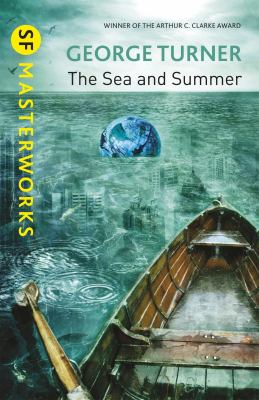
Thirty six years ago, on this day, January 3rd, 1988 the Australian newspaper the Sun Herald, ran a review of The Sea and Summer by George Turner under the heading “Melbourne is drowning” (possibly gleeful, given the Sydney-Melbourne rivalry).
The book itself? As Ruth Morgan explains
“Over a decade after his novel The Cupboard Under the Stairs won the Miles Franklin Award in 1963, Turner had turned to writing science fiction (Milner, ‘The Sea’ 112). The Sea and Summer, published as Drowning Towers (1988) in the United States, had earlier appeared as a short story, ‘The Fittest’ (1985), and reflected the growing popular awareness of the potential impacts of anthropogenic climate change in Australia. Turner envisioned a Melbourne drowned as a result of rising sea levels in the middle of the twenty-first century, its population cleaved into haves and havenots, the Sweet and the Swill.” (Morgan, 2014).
The amount of carbon dioxide in the air was roughly 351ppm. As of 2025 it is 425ppm, but check here for daily measures.
The context was that “the Greenhouse Effect” was becoming newsworthy, thanks to a combination of the ozone hole (sensitising people to atmospheric pollution generally) and the post-Villach efforts of scientists, including at the Australian CSIRO.
What I think we can learn from this
When an issue is “hot” (i.e. salient) then journalists will figure out a hook, books that might otherwise not get reviewed, get reviewed.
What happened next
In the second half of 1988 climate change became a public policy issue, that politicians etc had to have opinions about, say warm words about etc.
What do you think? Does this pass the ‘so what?’ threshold? Have I got facts wrong? Interpretation wrong? Please do comment on this post, unless you are a denialist, obvs.
References
Morgan, Ruth. ‘Imagining a Greenhouse Future: Scientific and Literary Depictions of Climate Change in 1980s Australia.’ Australian Humanities Review 57 (2014): 43-60.
The emissions kept climbing and the predictions came closer. Some of them have arrived. Others, well, they’re pending.
References/further reading
Black, M. (2017). Environmental Deadpan: New Scales and Sensations of Ecological Fallout. American Quarterly69(2), 397-409. https://dx.doi.org/10.1353/aq.2017.0033.
What do you think? Does this pass the ‘so what?’ threshold? Have I got facts wrong? Interpretation wrong? Please do comment on this post, unless you are a denialist, obvs.