Categories
Ignored Warnings Scientists United States of America

May 31, 1977 – “4 degrees Fahrenheit temperature rise by 2027” predicts #climate scientist Wally Broecker

On this day. May 31, 1977

Columbia University geologist Wallace S. Broecker May 31 said increased reliance on coal for energy might over the next 50 years raise the average temperature on the earth by four degrees fahrenheit. Broecker’s prediction rested on the greenhouse effect of carbon dioxide in the atmosphere: CO2 was transparent to incoming sunlight, “but somewhat opaque to outgoing earthlight” (sunlight reflected back out into space, where its heat would be dissipated). Carbon dioxide was produced by coal combustion; burning one ton of coal produced three tons of CO2.

“Coal impact on climate questioned” Facts on File World News Digest July 2, 1977

Four degrees Fahrenheit is just over two degrees Celsius. So, Broecker was wrong, but probably only by a couple of decades…

Broecker had been the first scientist to use the phrase “global warming” in the title of a scientific article.  He raised the alarm, kept raising the alarm (see here for his 1980 letter to Democratic senator Paul Tsongas).

Why this matters. 

Again, we knew, long before 1988. But it’s a far-off threat, of which we know little, so, you know, life goes on.

What happened next?

We kept on pretending there wasn’t really a problem – or rather, our lords and masters did. Some of us started panicking.

Categories
Australia Cultural responses United States of America

May 30, 1990 – Midnight Oil do a gig outside Exxon’s HQ in New York

On this day, May 30, 1990, Australian band “Midnight Oil” held an impromptu concert in New York, outside Exxon’s HQ. You can see the footage here

Exxon were villain du jour because of a certain carelessness the previous spring in Alaska.

We didn’t know then, but Exxon already had a solid ten years of climate knowledge under its belt – they knew that their product would wreck the planet, but why, erm, rock the boat?

You might also like this song, by “Max Q”

Why this matters. 

Culturally, we can resist.  Economically, persistently, strategically? Not so easy.

What happened next?

Midnight Oil kept burning.  They stopped while Peter Garrett, lead singer tried to change the system from within.  Have since resumed.


Exxon?  Oh, Exxon kept up their boundless love and generosity for future generations by, you know, funding denialist outfits, getting IPCC chairs sacked – the usual.

Categories
United States of America

May 23, 1977 – President Carter announces Global 2000 report… or “Let’s all meet up in the Global2000”

On this day, March 23, 1977, Jimmy Carter, then President of the United States, announced that he was gonna look into the future.

”I am directing the Council on Environmental Quality and the Department of State, working in cooperation with … other appropriate agencies, to make a one-year study of the probable changes in the world’s population, natural resources, and environment through the end of the century.”

President Jimmy Carter May 23,1977

This finally came out in mid-1980 as the “Global 2000” report, when he was a dead duck (rather than a lame one, which came later).

The Global 2000 report gave us the phrase “sustainable development” and, of course, had a section on carbon dioxide.

This was, after all, after the Charney Report, after the First World Climate Conference and so on.

Exxon knew, we knew.

Why this matters. 

States had been doing these sorts of forecasting things for a few years. This one could have mattered. Oh well.

What happened next?

Carter was thoroughly blasted out of office in November 1980 (with an independent splitting the “progressive” vote), and Ronald Reagan became the meat puppet representative of a whole lot of ever-so-slightly regressive guys, who did everything they could to slow down the awareness of/consensus around the “carbon dioxide problem” as it was then called.

Categories
Science Scientists Uncategorized United States of America

May 18, 1976 – US congress begins hearings on #climate

“On May 18, 1976, the House Subcommittee on the Environment and the Atmosphere (of the Committee on Science and Technology) met under the chairmanship of Congressman George Brown (D., Calif.) for the first of 6 days of hearings on the subject of climate and related research”(Hecht, 1981).

The early-mid 70s had seen a series of droughts, crop failures, cold winters and generally weird weather. Public and policymaker interest/concern were all high. This quote below, from an excellent 2014 paper called “The Dilemma of Reticence” (Henderson, 2014) gives useful info.

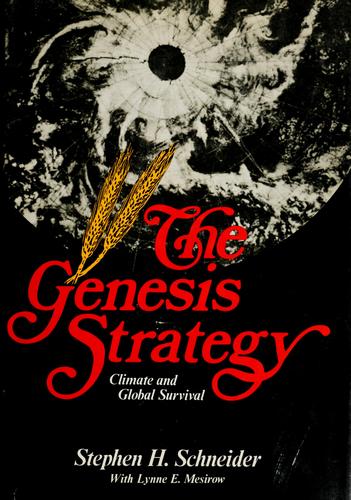
“Given Schneider’s rise as one of the most visible climatologists in the United States, Rep. George Brown, Jr. (D-CA) asked him to testify soon after the publication of The Genesis Strategy in front of the House Subcommittee on the Environment and the Atmosphere.

Given an increased reliance of Americans on a stable climate, Schneider argued that increased climatic variability was taxing existing technological and agricultural systems to a breaking point. Aware of the deficiencies of current climate models to account for the complicated feedback mechanisms of the global climatic system, he testified that it was crucial to change the “political consciousness” of the United States and overcome the short-term perspective and whimsical interests of policy makers.

“The worst mismatch in the future I see is the political system, whether it socialist or capitalist or totalitarian or democratic … is to short-term issues,” he cautioned.

While he could not specifically address whether the climate would change for the worse in the near future, he did believe that climate change issues provided a “sort of last-ditch symbol” for governments to realize the importance of thinking on generational time-scales.”

The Genesis strategy (1976 edition) | Open Library

Why this matters

We really knew enough by the late 1970s to be seriously worried, and to act. That “we” didn’t become aware until the late 80s, and have NEVER acted, is only partly down to human willingness to ignore problems/procrastinate. There have been wildly successful campaigns to confuse, to delay. Oh well.

What happened next

Schneider and Brown kept on trucking. Schneider, a mensch, died in 2010, just when we needed him the most.

Categories
Uncategorized United States of America

May 17, 1968 – “Some prophets of darkness warn of polar icecaps melting…”

On May 17, 54 years ago, a US government bureaucrat alluded to the danger of carbon dioxide build-up, in comments to a conservation group. We know this because they were read into the Congressional Record (akin to Hansard) a month later by a New York congressman called Richard Ottinger.

We forget that in the mid-60s people were beginning to join the dots (and of course some of the wrong dots) about what was coming. There had been some film and print publications in the late 50s (mostly tied to the International Geophysical Year) around the possibility of carbon dioxide build-up causing the icecaps to melt and sea-levels to rise. Those fears were still “in the air”

REMARKS BY MAX N. EDWARDS, ASSISTANT SECRETARY OF THE INTERIOR FOR WATER POLLUTION CONTROL, BEFORE THE FONTANA CONSERVATION ROUNDUP, FONTANA DAM, NORTH CAROLINA, MAY 17, 1968

“A great number of articles are being written these days and a lot is being said about the gradual erosion of the kind of environment man must have to sustain life on this planet. Many Geologists paint a very gloomy picture of life in the next century. Some tell us that continued destruction of our forests, plant life and estuaries, coupled with the earth’s increased emission of carbon dioxide and sulfur oxide, will reduce the oxygen in the atmosphere to catastrophic, low levels. Some prophets of darkness warn us of another ice age slowly eroding the Great Plains or polar ice caps melting and submerging every coastal city in the world lying less than 300 feet above sea level.”

Categories
Denial United States of America

May 14, 2002 – well-connected denialists gather in Washington DC to spout #climate nonsense

On May 14, 2002 in Washington DC the “Frontiers of Freedom” [see DesmogBlog entry] held a meeting in Washington DC – the kind of thing you do if you’re trying – as they were – to make it easier for rightwing politicians to vote against things domestic and international agreements on environment and climate. At this point, the George W Bush had pulled the US out of the Kyoto Protocol. A month later, Australian Prime Minister John Howard would do the same.

This event had the usual suspects, including Malcolm Wallop, who had been a Senator for Wyoming, and had attended a pre-Kyoto conference in Canberra in 1997,

Sen. Malcolm Wallop (ret.), chairman — The Science and Environmental Policy Project and The Cooler Heads Coalition —

John Daly, climate scientist from Australia —

Dr. S. Fred Singer, climate scientist from United States —

Christopher C. Horner, counsel to the Cooler Heads Coalition and senior fellow at CEI.

Why this matters

It is at events like these that the hegemony of the fossil way of thinking is sustained. Soothing blandishments about impact science being “junk science”, about everything being just fine, if only the Leftards would shut up/be silenced, are repeated.

What happened next

These guys have kept winning, really, haven’t they? Daly died in 2004. I just stumbled across some very forensic work on who funded him. See here.

Categories
International processes United States of America

May 12, 1989 – USA says it will, after all, support the idea of a #climate treaty

On this day, May 12th 1989, the Bush Administration of the United States finally reversed its position of opposition to a climate treaty (“too soon, let’s do more research” that sort of thing).

Now it said it would that it would support negotiation of a framework convention on climate change.

Why the end to the foot-dragging? It may have had something to do with the embarrassment of being caught red-handed trying to silence climate scientist James Hansen (something they’d keep trying to do).

See Los Angeles Times article here.

WASHINGTON — 

The White House, in an apparent softening of its position on a major environmental problem, has dropped its opposition to a formal treaty-negotiating process on global warming, it was learned Thursday.

Until now, the United States had been alone among major Western economic powers in opposing such an initiative.

The change of position was outlined in a cable dispatched Thursday to U.S. delegates at an environmental conference in Geneva sponsored by the United Nations.

Saying it was essential for the United States to exercise a leadership role, the cable said, “We should seek to develop full international consensus on necessary steps to prepare for a formal treaty-negotiating process.”

Why this matters

They have to be dragged every millimetre. Stop dragging and they pull back. That’s how it has always been.

What happened next

The US administration – doing what its oil and auto-industry wanted – blocked and delayed, delayed and blocked the start of the negotiations, the negotiations themselves and ever since. And here we are.

Categories
United States of America

May 11, 1988 – “Greenhouse Glasnost” USA and USSR to co-operate on climate

On this day in 1988

“a new form of scientific communication between the United States and the Soviet Union was officially initiated in simultaneous opening ceremonies in Moscow and Washington DC. In a one-year bilateral project entitled “The Greenhouse/Glasnost Teleconference”, approximately 25 Soviet and American Scientists will be linked by computer to study the implications of global climatic change.”

The United States-Soviet “Greenhouse/Glasnost” Teleconference Peter H. Gleick: Ambio, Vol. 17, No. 4 (1988), pp. 297-298

By 1988 the Cold War was “over” – the coming of Gorbachev in 1985, the Chernobyl disaster of 1986 and so on had meant that the sabre-rattling and terror of the early 80s was slowly receding. The teleconference (for which initial discussions had begun in 1985) was I think supposed to mark new scientific co-operation (the Soviets had been on the ball with awareness of carbon dioxide build-up at pretty much the same time as the Americans, i.e. from the late 1950s).

Why this matters

Good to remember that before Thatcher’s Damascene conversion in September of that year, the climate issue was being pushed up the agenda by decent people

What happened next

The Soviet Union collapsed. The “West” went on a decade-long victory lap of idiotic triumphalism. And here we are, with the atmosphere getting properly full of co2, and the consequences closing in…

Categories
UNFCCC United States of America

May 8, 1992 – UNFCCC text agreed. World basically doomed.

On this day, May 8 1992, after more tense negotiations in New York, the Americans agreed to a text that would be signed down in Rio at the Earth Summit in June.

All through the “negotiations” had basically played chicken, threatening not to come to Rio if the treaty to be signed there included targets and timetables for emissions reductions by rich countries.

So, Michael Howard then the British Environment Minister had flown over to negotiate the surrender by the French/Europeans on the questions of targets and timetables. The text to be ceremoniously sighed would be a framework convention rather than one with any teeth. 

And you could argue that that actually is the end of the international “policy window”, in the middle of 1992. Yes, you have have the flim-flam and the theatre of Rio and you have various states ratifying, speeches but the end of anything substantive was May 8th, a day that would live in infamy if our species had two brain cells to rub together.

Categories
Science Scientists United States of America

May 7, 1966 – scientist warns public about carbon dioxide build-up…

On May 7 1966, Roger Revelle the noted American scientist had a story in the popular news magazine Saturday Review on carbon dioxide and the oceans.

In it Revelle wrote

“Human beings are now carrying out a large-scale geophysical experiment which, if adequately documented, may yield a far-reaching insight into the processes determining weather and climate. We must not forget, however, that even a relatively small rise in the average annual temperature of the atmosphere might be accompanied by other more serious changes, for example, shifts in the position or the width of belts of low rainfall.”

To be clear – he was not yet saying “watch out”, as others soon would be. Just before this quote he wrote

“In general, our attitude toward the changing content of carbon dioxide in the atmosphere that is being brought about by our own actions should probably contain more curiosity than apprehension.”

Why this matters

We need to remember that people have been warning about the build-up of carbon dioxide for an extremely long time as a potential problem.

Revelle, we should say was one of the founders of the climate issue having written with Hans Seuss about the way in which the oceans might not be soaking up as much co2 as the dogma suggested, and having hired Charles David Keelng whom he found very irritating. (see, Joshua Weiner’s book) 

What happened next 

Revelle kept researching and writing. Other people kept researching and writing. The climate issues slowly, painfully, worked its way up the policy agenda, but didn’t really get down until 1988.