To quote yesterday’s blog, which was also about 1969, the context is that by the late 1960s smart people were paying attention to – and starting to get worried about – carbon dioxide build-up. Burnet was not alone in this.
But the broader context – which I have not seen in the popular accounts of Moynihan’s warning (it crops up on Twitter occasionaly). Tricky Dick Nixon was keen to get Europeans thinking about, well, anything other than Vietnam, and was seeking to retool NATO to include “challenges to modern society” – including ‘the environment’.
Connecting with President-elect Richard Nixon in 1968, he joined Nixon’s White House Staff as Counselor to the President for Urban Affairs. He was very influential at that time, as one of the few people in Nixon’s inner circle who had done academic research related to social policies.
In 1969, on the initiative of Nixon, NATO tried to establish a third civil column, establishing itself as a hub of research and initiatives in the civil region, dealing as well with environmental topics.[6] Moynihan[6] named Acid Rain and the Greenhouse effect as suitable international challenges to be dealt by NATO. NATO was chosen, since the mutual defense organization had suitable expertise in the field and experience with international research coordination. The German government was skeptical and saw the initiative as an attempt to regain international terrain after the lost Vietnam War. The topics, however, gained momentum in civil conferences and institutions.[6]
Let no-one tell you this was a sudden surprise in 1988 (and even if it were, we’ve had a generation to start taking action).
What happened next?
More and more people became aware of the problems. But awareness is not political and economic power, and those who were doing nicely from the sale of deliciously cheap and abundant fossil fuels saw no reason to stop. And every reason to stop those who wanted them to stop. So that’s what they did, very well, for a very long time. Eternity, effectively.
1982: Warren County, North Carolina. Birth of the “Environmental Justice” movement
September 15 – October 31: State uses nearly one million dollars of police force to bury 10,000 truckloads of PCB-contaminated soil from approximately 250 miles of roadside.
Warren County citizens and their supporters march, protest and over 500 people are arrested. The environmental justice movement is launched.
On this day, September 7 1977, climate scientist Stephen Schneider is on the Johnny Carson show for the last time (he deviated from the script!)
“How many of you think the world is cooling?” That’s what Steve Schneider asked the studio audience of the Tonight Show with Johnny Carson in September 1977. And when the majority put their hands up, he explained that the recent cooling trend had only been short-term. Though the unscripted poll meant Steve wasn’t invited back to the programme, through the summer of that year he had brought climate science to US national TV. The appearances typified Steve’s efforts to bring climate change to the world’s notice – efforts that would later draw attention of a less desirable sort.
On this day, September 4 2006, the Royal Society (venerable Science outfit, 360ish years old) asked the American oil company Exxon to knock it off with the climate denial support.
On this day the atmospheric carbon dioxide level was 379.04 ppm Now it is 420ish- but see here for the latest.
Why this matters.
Exxon had been/has been an enormous source of climate denial, despite their own scientists saying in the 1970s that yes, indeed, global warming because of the burning of fossil fuels was going to be a serious thing. A bunch of scientists who don’t like hand-to-hand combat coming out and saying “stop right there thank you very much” was a big deal.
Turns out “A group at the International Institute for Applied Systems Analysis (IIASA) has explored several possible C02 games. A framework built around impacts of climatic change, scientific uncertainty, external factors, and policy options of prevention, adaptation, and compensation is described in this article. The framework is designed to raise questions of what could happen to whom, when, and to what effect.”
On this day the atmospheric carbon dioxide level was 340.46 ppm Now it is 421ish- but see here for the latest.
Why this matters.
The game is the game, and the game is rigged.
What happened next?
We kept burning the fossil fuels, and building the infrastructure to burn ever more fossil fuels.
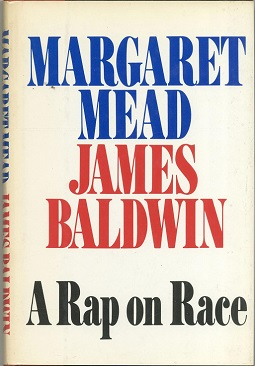
“Margaret Mead (December 16, 1901–November 15, 1978) and James Baldwin (August 2, 1924–December 1, 1987) sat together on a stage in New York City for a remarkable public conversation about such enduring concerns as identity, power and privilege, race and gender, beauty, religion, justice, and the relationship between the intellect and the imagination.” https://www.themarginalian.org/2015/03/19/a-rap-on-race-margaret-mead-and-james-baldwin/
This only tangentially has much to do with climate change, but Mead and Baldwin are both stone-cold geniuses, so indulge me here.
Mead was part of Roger Revelle’s subgroup about the atmosphere for President Johnson’s science advisory committee in 1964.
Baldwin? Stone cold genius, on so many issues. Key quote – ”Not everything that is faced can be dealt with, but nothing can be dealt with until it is faced.”
[The level of carbon dioxide in the atmosphere was 324.69 ppm. Now it is 421ish- but see here for the latest.]
Why this matters.
If we don’t want to listen to the smartest among us, then what is the point?
What happened next?
Mead would go on to co-chair the 1975 ‘Endangered Atmosphere’ conference with Stephen Schneider, that has the denialists all aerated [see here].
On this day, August 24th, in 1994 the first signs of a split in the business opposition to climate action appeared.
[The level of carbon dioxide in the atmosphere was 357.59 ppm. Now it is 421ish- but see here for the latest.]
“An additional factor was the splintering of industrial interests. The Global Climate Coalition and the Climate Council had been the main industry participants in the INC, representing mainly coal and oil interests. However, a development within INC 10 was the emergence of an industry lobby in favour of the convention’s further C02 reductions (ECO, 24 August 1994: 4; 26 August, 1994: 1). There was now a wide coalition of industrial interests favouring action on climate change. One consisted of parts of the insurance industry, scared of losses from freak weather (and whose interests have been forwarded, interestingly, by Greenpeace). Another was the ‘sunrise industries’ of renewables and energy efficiency. Yet another was the gas industry.
Matthew Paterson 1996 page 194
Why this matters.
Splits in the previously united church/state/business sector are part of ‘how things change’ if you believe all that dialectic stuff. It’s immaterial now though, given how the atmospheric concentrations have climbed, will climb…
What happened next?
A few re-insurers turned up for a day at the COP1 meeting in Berlin the following year, but were of course outnumbered, outgunned and outfought by the fossil lobbyists. (See Jeremy Leggett’s “The Carbon War” for an account of this).
Then, in 1997, BP became the first sizeable defector from the Global Climate Coalition. Now actual outright denial is relatively rare. But resistance to appropriate action continues…