Twenty years ago, on this day, July 30th, 2006,
Murray Bookchin died

The amount of carbon dioxide in the air was 381ppm. As of 2026, when this post was published, it is 430ppm. This matters because the more carbon dioxide in the air, the more heat gets trapped. The more heat, the more extreme weather events. You can make it more complicated than that if you want, but really, it’s not. Fwiw, I have a tattoo of the Keeling Curve on my left forearm.
The broader context was that Bookchin was a very big deal in anarchist circles.
Murray Bookchin (/ˈbʊktʃɪn/; January 14, 1921 – July 30, 2006[1]) was an American social theorist, author, orator, historian, and political philosopher. Influenced by the works of G. W. F. Hegel, Karl Marx, and Peter Kropotkin,[2] he was a pioneer in the environmental movement.[3] Bookchin formulated and developed the theory of social ecology and urban planning within anarchist, libertarian socialist, and ecological thought. He was the author of two dozen books covering topics in politics, philosophy, history, urban affairs, and social ecology. Among the most important were Our Synthetic Environment (1962), Post-Scarcity Anarchism (1971), The Ecology of Freedom (1982), and Urbanization Without Cities (1987). In the late 1990s, he became disenchanted with what he saw as an increasingly apolitical “lifestylism” of the contemporary anarchist movement, stopped referring to himself as an anarchist, and founded his own libertarian socialist ideology called “communalism“, which seeks to reconcile and expand Marxist, syndicalist, and anarchist thought.[4][5]
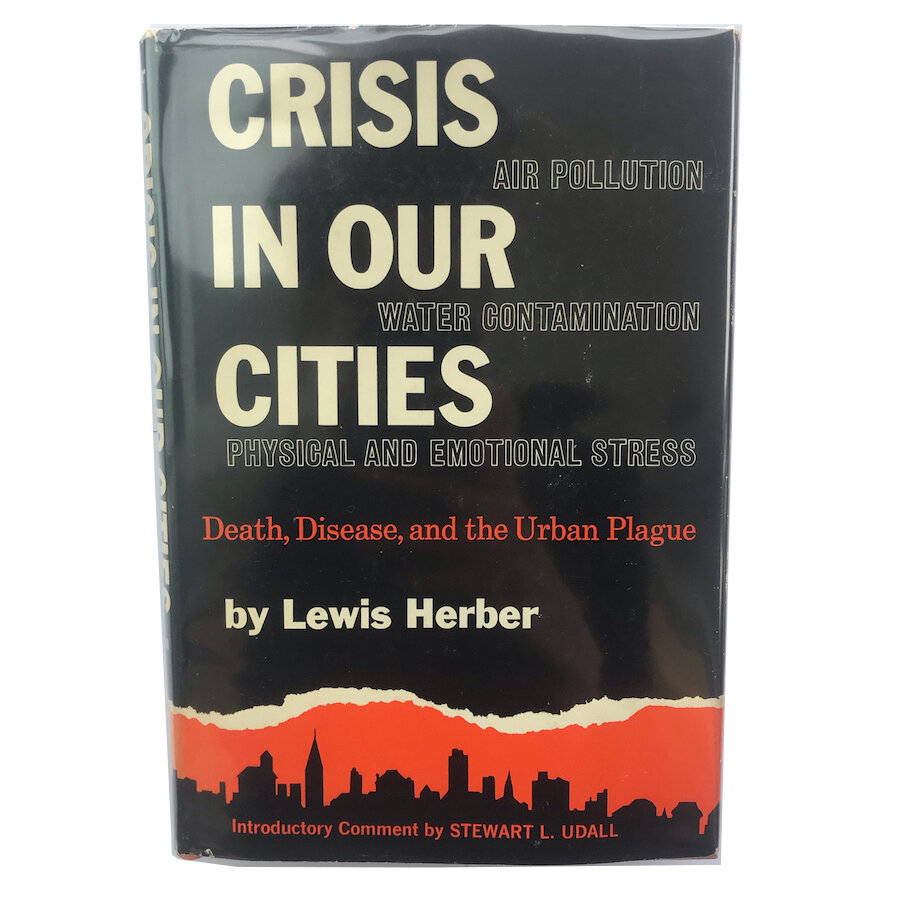
The specific context (around climate) is that his 1965 book Crisis in Our Cities is one of the first warnings about carbon dioxide build-up to appear in mainstream American non-fiction.
On page 187 we have this –

And this – “Meteorologists believe that the immediate effect of increased heat leads to violent air circulation and increasingly destructive storms…. theoretically, after several centuries of fossil-fuel combustion, the increased heat of the atmosphere could even melt the polar ice caps of the earth and lead to the inundation of the continents with sea water.”
(warnings would become more stark soon, with shrunken timescales).
What I think we can learn from this- vale Murray.
On this topic, you might like these other posts on All Our Yesterdays
Xx
References
xx
You can see the chronological list of All Our Yesterdays “on this day” posts here.
What do you think? Does this pass the ‘so what?’ threshold? Have I got facts wrong? Interpretation wrong? Please do comment on this post, unless you are a denialist, obvs.
If you want to get involved, let me know.
If you want to invite me on your podcast, that would boost my ego and probably improve the currently pitiful hit-rate on this site (the two are not-unrelated).
Also on this day:
July 30, 1968 – the UN says yes to an environment conference
July 30, 1979 – scientists warn US Senators about synfuels and carbon dioxide build-up
July 30, 1979 – synfuels would be sinful…
July 30, 1989 – UK Conservative politician warns “we have at most 25 years to take action.”