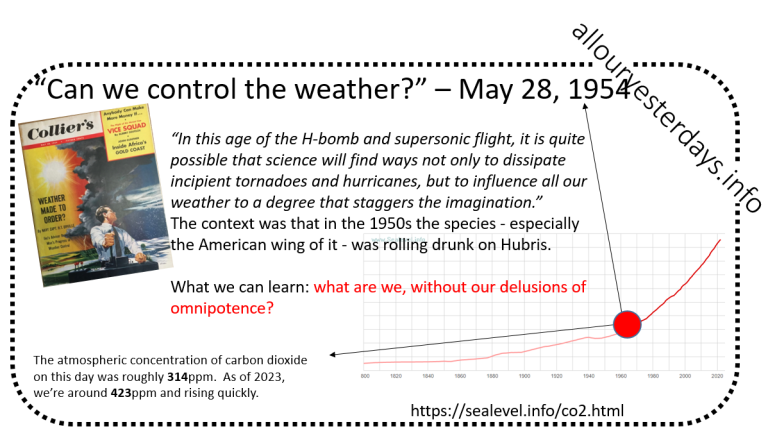
The amount of carbon dioxide in the air was roughly 378ppm. As of 2024 it is 423.7ppm, but check here for daily measures.
The context was that the denialists had been able to get lots of their bullshit published in mainstream outlets, not on the basis of, you know, peer reviewed science or anything credible, but simply by using (or abusing if you want) the idea that the media has to show “both sides.” This is aside from the fact of who owns the media and what their long-term interests or short term interests are. And here we have a paper which lays that out by Boykoff and Boykoff. A good paper, you should read it. Unfortunately, it’s still largely relevant. And if you’re like me, he went through the naughties and teens writing to the BBC complaining about all the space given to nutjob denialists and getting the form response about BBCs responsibility for impartiality and giving both sides of an argument and then you would write back and say you don’t give Holocaust deniers equal billing. And then they wouldn’t reply to that. At least some of these people must have known better, but consider themselves blameless. Everyone is blameless. So it’s someone else’s fault.
What I think we can learn from this is that “our” systems of thought and truthiness have been successfully hacked.
What happened next: The denialists kept using the argument around impartiality and then complaining about censorship, etc. Some media outlets banned denialist comments from under the line. But on the whole, they didn’t. And the thing about climate change is it enrages so many people. And part of the reason it enrages is that humans are not on top. And another part for a lot of them is that they kind of by now know that they backed the wrong horse. And they hate the fact that the hippies were right and that they were wrong.
What do you think? Does this pass the ‘so what?’ threshold? Have I got facts wrong? Interpretation wrong? Please do comment on this post, unless you are a denialist, obvs.
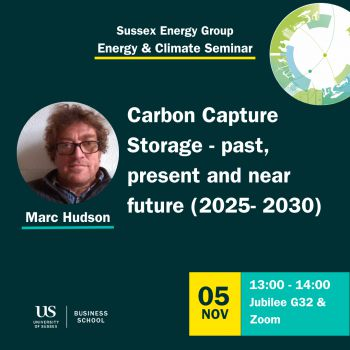
Hello everyone. I am doing another seminar in the Sussex Energy Group’s Energy & Climate series.
On Tuesday 5th November from 1300hrs to 1400. It is free to attend, you just have to register.
It is based on work I’ve been doing since my book (did I mention I have a book out?) and tries to gaze into the crystal ball to see what might be coming… Keen to hear people’s comments, questions, thoughts, critiques..
.
The blurb for the seminar is here
Carbon Capture and Storage has been proposed and nearly with us for two decades. The rationale has shifted from saving the coal industry to industrial purposes and now the production of ‘blue hydrogen’ and even greenhouse gas removals. It is currently in the midst of one of its periodic hype cycles.
The UK has had a series of proposed pilot projects, crashed competitions and a recently repeated promise of $22bn in funding for construction of CCS infrastructure. This has raised the political temperature, and the fragile consensus in favour of it may not survive. How much can the last 20 years tell us about the next 5? Drawing on his recent book and developments since it was written, Marc Hudson will offer:
some metaphors for thinking about CCS (Schrodinger’s Cat and the T-1000 Terminator)
a very brief overview of the history to date and present status – both globally and in the UK
some possible scenarios around the politics, economics and physics for the UK in the coming 5 years
a set of important tasks for “non-captured” intellectuals and academics in the coming months and years.
I will talk for no more than 30 minutes, meaning that there’s at least 25 minutes for question and answer
You can see my previous two SEG seminars, from 2022.
March 8 2002: – Industrial Decarbonisation: where does it come from, where might it go?
Still here? Okay, thanks for the vote of confidence.
Now. Read this [link]. Ideally out loud. Ideally twice. Then stop and think about what that would feel like.
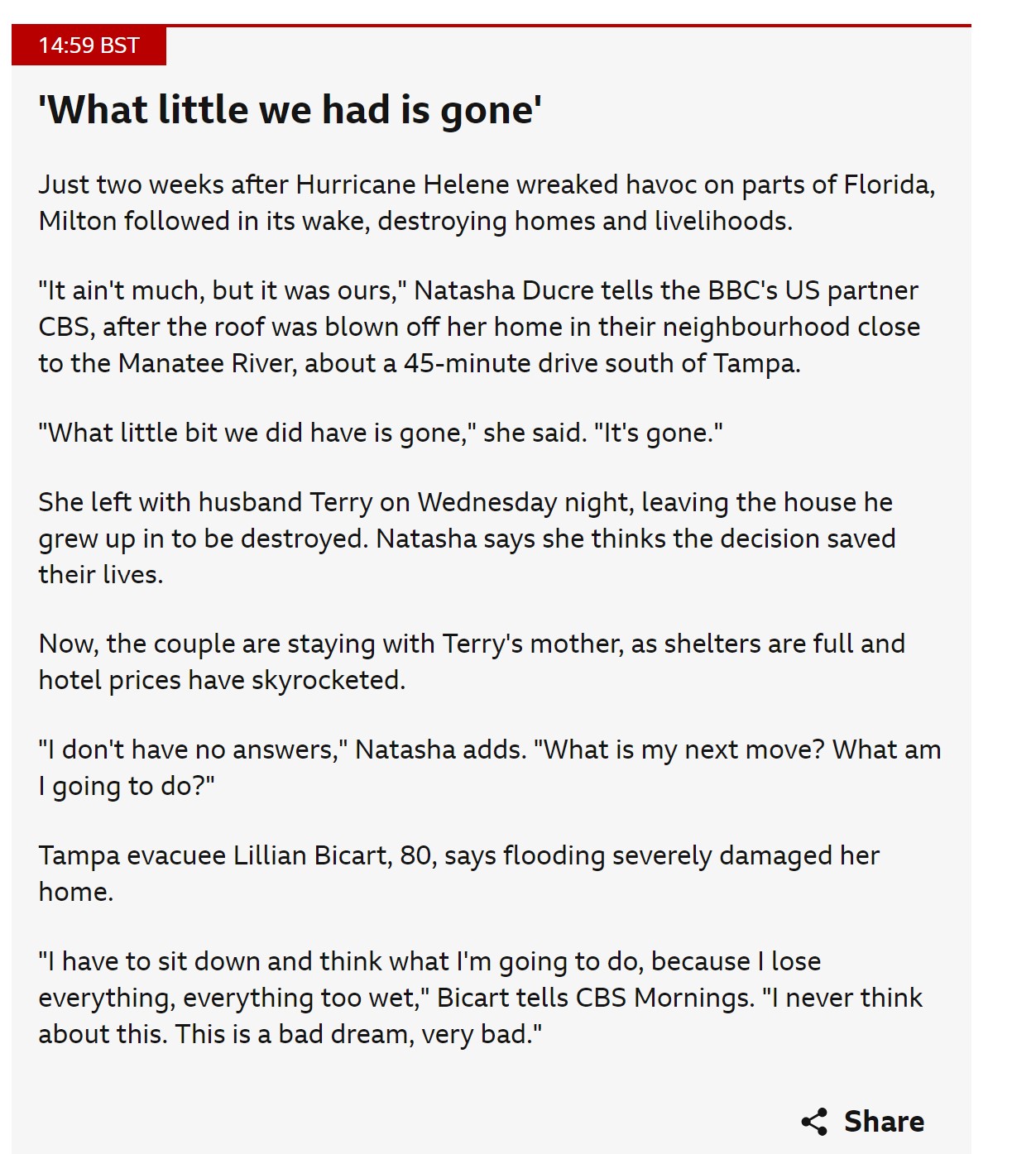
Want some more? From some Brits who only moved to the States a couple of years ago? The BBC can oblige. Here you go.
If you need a dose of vicarious misery pornography, and the Middle East doesn’t do it for you (wrong colour people, wrong languages etc) then Mother Nature and the 24hr news beast can provide. Endless photos, horror stories. Here comes the 21st century.
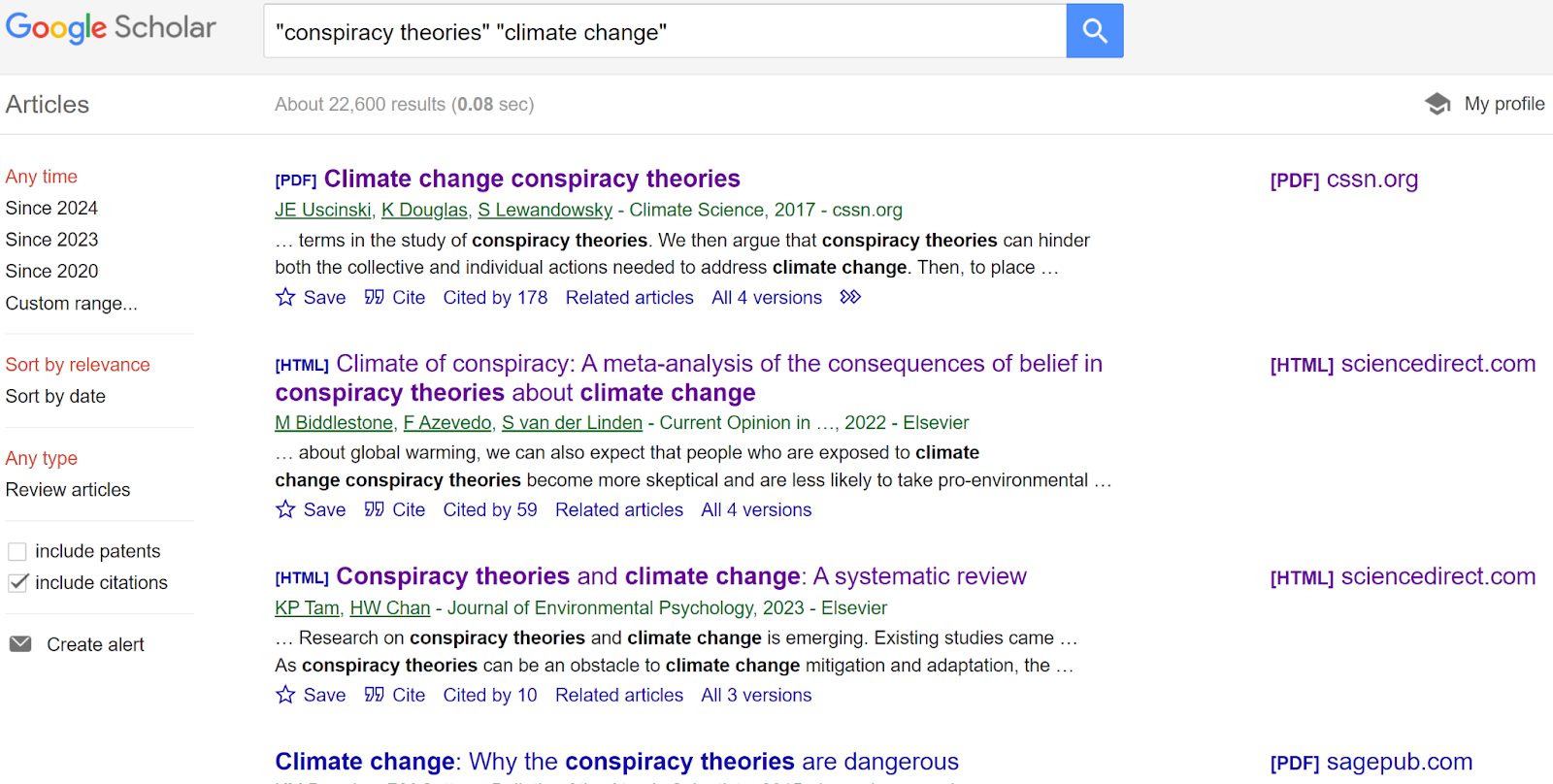
And of course, as you will also know if you’ve been following this even cursorily, there are just tons of “conspiracy theories” doing the rounds, and a lot (no, I mean a LOT) of articles, tweets about that. Which is what I am here to write about.
The articles include these three, which are both worth your time
The first two (I’ve added the Heglar upon finding it, on Oct 13) are very focussed – as journalists and pundits often are – on the recent past. Not so many of them make the obvious points (reasons of space, and focus and time and so on) that
There is a good book by Jason Rodger Fleming (2012) on all this, called Fixing the Sky. The cover art is from a 1950s magazine article, and you can see it in this All Our Yesterdays tile.
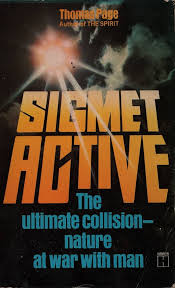
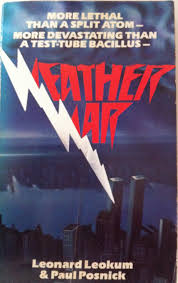
3. There have been stories about people controlling the weather for, well, since humans began telling the stories. Gods would do it and then their self-appointed ‘ambassadors’ on earth would (claim to do it). It’s a standard sci-fi trope. The two examples below are among MANY. I chose them because
a) They’re from the mid-1970s, when ALL sorts of anxieties were knocking about (the seeming end of prosperity, cheap oil, the American empire, the emergence of climate threats etc).
b) I have read them both and loved them, since watching Geostorm. My article (Hudson, 2017) on that disaster film includes LOTS of examples of weather control films, and some excellent observations from a ‘sci-fi tragic’ friend I am seeing tomorrow, for the first time in far too long.
c) The covers are mint.
And these novels were inspired by things like HAARP –
“High-frequency Active Auroral Research Program, a US government-funded program that studies the ionosphere” [Wikipedia].
Not to haarp on about it…
4. People can have a hard time separating stories they have heard a lot from “reality” (like, you know, bearded sky gods who take a personal interest in whose and what type of genitals an individual is rubbing their own genitals against).
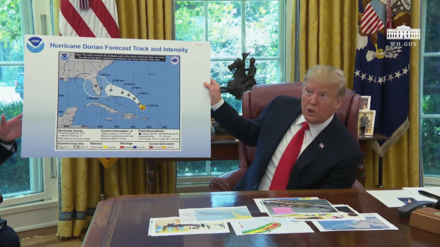
Also, have we all forgotten Donald F – sorry, ‘J’ – Trump and his sharpie? The Dorian-Alabama thing in 2019, aka Sharpiegate. Have we?
Philosophical interlude
What did we do in response to the pain we can’t imagine? And the ‘stupidity’ we are sure we are better than? We – some of the best among us – reported and commented on what was happening without offering historical, political, psychological context. Blinded by our fear of what is already here, and what it presages.
Conspiracy theories about weather manipulation are, unfortunately, the logical next step in climate denialism, and the traction they are getting shows how hard it is to get out of this absurdly terrifying loop.
I know we shouldn't expect consistency from conspiracy fantasists, but seeing people claim that "human beings can't possibly alter the climate" AND "human beings are causing hurricanes with cloud seeding/chemtrails/Jewish space lasers" suggests we really are doomed as a species.
I know we shouldn’t expect consistency from conspiracy fantasists, but seeing people claim that “human beings can’t possibly alter the climate” AND “human beings are causing hurricanes with cloud seeding/chemtrails/Jewish space lasers” suggests we really are doomed as a species.
I can hear the objections, that I am being unfair to these (good) thinkers and misunderstanding the limits of a limited social media platform. SO I say, calmly and quietly, the following.
YES I KNOW THESE ARE TWEETS BUT THERE ARE SUCH THINGS AS
Twitter threads
Blogs and columns you write and then tweet about to your tens/hundreds of thousands of followers so they are not merely confirmed in their fear/disdain, but forced to think.
And the rest of us? We do like to the mock the Jewish Space Laser people. (I understand that impulse, and give into it most of the time)
And we push the stupidity narrative.
And we framed the problem as (only) stupidity. And not our stupidity.
I will say this several times in the rest of this rant. The stupidity narrative (especially on its own) doesn’t help. You could almost say it is… what’s the word… stupid?
But it is both easy and also it makes us feel good. And ultimately, what matters more than that?
Most of the people pushing these lines probably don’t like the Conservatives very much. And if they’re old enough and British, they probably didn’t like John Major (UK Conservative Prime Minister from 1990 to 1997).
In February 1993, speaking to the entirely wonderful newspaper the Mail on Sunday, Major said – in the context of the murder of a 2-year old boy by two 10 year-olds – “ ‘Society needs to condemn a little more and understand a little less,”
But we need to condemn a little less and understand a little more.
What’s the backstory?
The back story is not just “neoliberalism” (though that really hasn’t helped. It is not as if the “Keynesian” government of the Glorious 30 (1945-1973) were beloved (see Seabrook, 1978; Gross, 1980; Slater, 1972). Things weren’t great before (though in retrospect they look like, well, a Golden Age). Nearly 40 years of ‘austerity’ and widening wealth gaps has happened.
Enormous social changes (some for the ‘better’, some perhaps not). Enormous technological changes. People feel hella disorientated, aggrieved etc.
And on neoliberalism? It is part of the response to the Crisis of Democracy. What’s that? Well, here’s a short Noam Chomsky video.
But humans are also fragile, cognitively. It’s easy to plant false memories in them. [Wikipedia]. And we are so surrounded by stories, all day. We are made of dreams and bones, sang Pete Seeger. And stories.
It’s a comforting story, people believe it. And it is a very short sidestep to Smart, Qualified People acting nefariously in cahoots with the WEF, OECD, PTA, whoever.
At least somebody is in charge, at least somebody knows what is going on. “Phew, we do, ultimately, live in a rational society.”
Except, remember that Nate Bear article you didn’t go and read? Or you did and you’re about to get a repeat….
Bear talks about reading a well-meaning tweet from someone who laments ‘if only we’d been told about the brain-damage aspect of COVID in 2020, we’d have acted differently’ and observes it got a lot of likes and retweets. And Bear writes
I’m going to be honest about what this says to me.
It says that too few people who consider themselves informed, clever, rational, followers of science, have spent any time thinking about how bad things happen and why.
It suggests to me a certain amount of privilege in your circumstances and life experiences.
My brain kind of translates it as how did I, a white person in the global north, where I thought we had our shit together, end up living in such an irrational society?
Bear, N. 2024.
What about the race, class, gender and general powerlessness (stripped out civil society). And the pandemic if you haven’t spoken of it before and anyhoo, recap
So, here’s a new section I am going to put in all these sorts of rants, I mean, “considered and very publishable in respected outlets think pieces.” You can call it mechanical, abrupt, virtue-signally, whatever floats your boat. I will call it forcing myself to think about things I can – as a white, male, hetero, middle-class, able-bodied mofo – very easily pretend don’t actually matter (pro-tip, they do).
Incomplete list to consider (e.g. age, species)
Well then.
Race
Why might black people be suspicious of the medical system? Why might they have crazy crazy ideas about being neglected, or used as unconsenting guinea pigs, their diseases treatable but left untreated? BECAUSE IT HAPPENED. But that sort of thing has definitely stopped. For sure. Yes.
Class
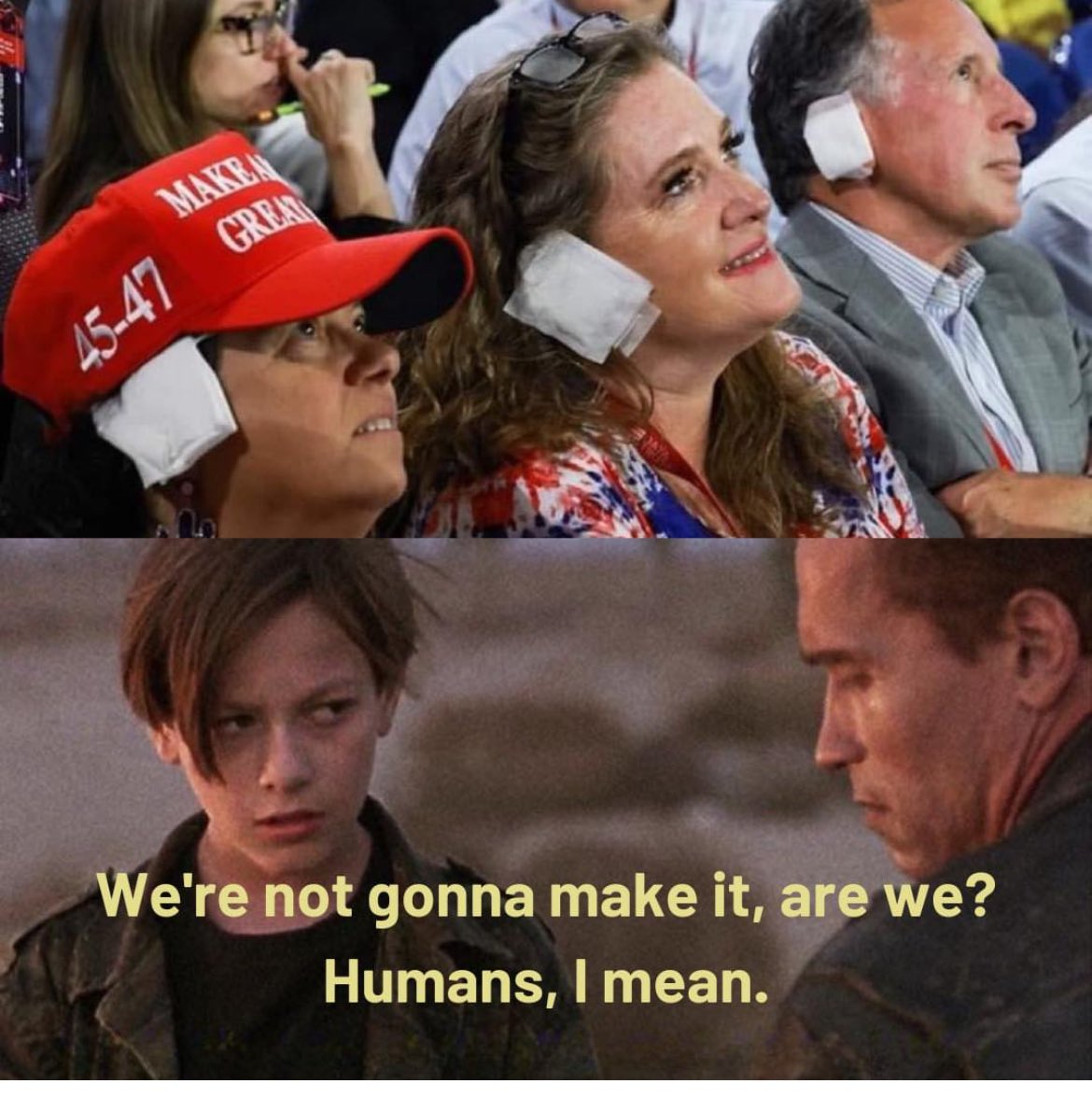
Just go reread the quote about losing everything at the top. And also look at the people in that meme with the bandages on their ears. They are of a different class. They are part of a class that likes Trump’s tax cuts. And the permission Trump gives them to sneer at anyone Not Them.
Gender
Think about all this in interplay. And think about what it will be like for female meteorologists. Remember, when the death threats started flying at Australian climate scientists in the late 2000s, women copped more. And still are (as per Gergis, 2024).
Powerlessness
It’s all combined. The neoliberalism (destroying the democratic state), the algorithms and surveillance and carceral state. The sense of hopelessness that anything will get better, that the enormous challenges will be dealt with. There ARE evil actors out there, meaning harm. But it’s easier to punch on meteorologists than the people who wrote Project 2025, because those guys have the power to mess you up good and proper. So allow your fear, hate, despair, anger to be channelled towards punching ‘down’.
Pandemic
Unprocessed trauma. Trauma about how the whole thing has been memory-holed. See also Terror Management Theory
Synergy/intersectionality
Yeah. If you have to ask, you won’t ever understand.
Time for more Bear. Read more Bear.
“Under conditions of depoliticisation, people either reach for conspiracies or mold their understanding of events into long-standing explanations of the world. This goes as much for centrists and even some leftists as it does for the right.
“Centrists famously lack the ability to see the world through prisms of imperial capitalist power, leftists see imperial capitalist power behind every crisis, and the right see manufactured threats to a loosely defined freedom as behind every crisis.”
Bear, 2024
What it implies/what is coming next(what hand-wringing opportunities for guilty impotent liberals [most of us] lie ahead?
At times like this, one needs to quote the famous Swedish political philosophers Ulvaeus, and Andersson.
“Something bad is happening, I’m sure you do agree
People care for nothing, no respect for human rights
Evil times are coming, we are in for darker nights”
The anger and all the rest of it isn’t going away, whether Trump i) wins, ii) steals or iii) is somehow unable to steal and that nice Kamala Harris gets into the White House. The goose, like the planet, is well and truly cooked.
More death threats and shit against the impact scientists (meteorologists, disaster preparedness etc etc – see the Walzer quote below).
What is to be done? (by social movement organisations. But won’t be)
Oh, the usual.
Create and maintain functional groups that support members, extend their skills, knowledge and relationships while avoiding co-optation, cognitive capture, repression and burnout.
Work with other similarly effective groups across a range of issues (all the issues), sharing resources and working to democratise the state (good luck with that) and using the state to control private concentrations of power.
Create and defend venues for individuals and networks to figure out what is actually going on.
Easy-peasy.
It’s the only way you’ll prevent climate meltdown, and as long as you start in the early 1970s and work consistently and persistently and don’t suffer too many setbacks, by about 2026 or so you’ll be home free.
What are the academic theories I find useful for thinking about this/Concepts for you to use (in rough order of importance or alphabetical order or no order whatsoever because there were other things I had to do and anyway i) ymmv and ii) about three people are reading these
Terror Management Theory [Wikipedia] – people scared of death. And they figure ways to ignore it, blame others
Anti-reflexivity – we’re fed up with how damn COMPLICATED the world has gotten. See this by McCright and Dunlap.
It’s a bit of a miracle that an article (okay, rant) about conspiracy theories hasn’t already referenced Lewis Carrol and “Six impossible things before breakfast.”
Well, here’s three impossible things to do before breakfast. (Also, like accusations, every bit of advice is a confession).
A little humility
Maybe (we) liberals could reflect on all the patently absurd shit we either believe or find convenient to pretend in pubic to believe?
About markets, democracy, progress, the capacity of their institutions to cope with climate change.
A little fucking humility might be in order (1)
Marilyn Robinson’s 1989 book Mother Country: Britain, the Welfare State and Nuclear Pollution was so incendiary that those loveable scamps at Greenpeace sued her for libel (and won). Among its many gems was one she wrote(and I can’t find the exact page number or quote, so this is a paraphrase – if you have a copy, please let me know) (2).
“Most people know a little about some things and nothing about everything else. They have little islands of knowledge in vast seas of ignorance”
And Robinson was writing thirty years ago, before the sea level rise – literal and of metaphorical ignorance was rising.
A little empathy, compassion, hermeneutical phenomenology, whatever label you want to stick on it.
Who knows, maybe some compassion and imagining what the world would look like in someone else’s shoes? (3).
Update on October 13, 2024 – See this from Heglar (2024) on the question of compassion
So why are folks running to invent new conspiracy theories when the real, undeniable conspiracy is right there? Because for them to change their mind would be to lose a very real part of their identity and, perhaps, to have to consider the possibility that some of their other beliefs may not be real either. And that might mean they need to find new communities or even new families. Changing your mind about something as colossal as the ground you live on and the air you breathe is not unlike coming out of a cult.
But we don’t treat people that way. We treat them like doofuses who fell for an obvious lie. Ultimately, who does that serve? Perhaps it’s time we start treating these people as what they are: victims of a manipulative, deliberate lie. And then turn our attention back toward the people who lied to them.
TO BE CLEAR: THIS IS DISTINCT FROM CONDONING OR TOLERATING DEATH THREATS.
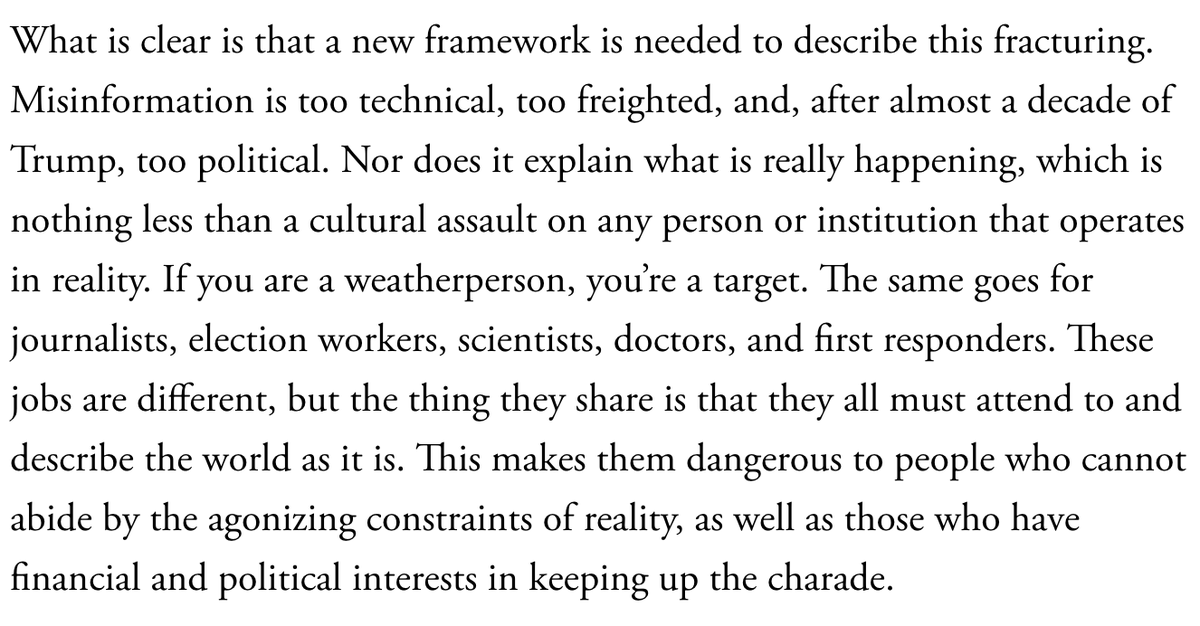
Earn your ‘keep’ as intellectuals and tackle the “Warzel challenge” Remember those two articles at the beginning of this post. Well, the second was by a guy called Warzel. “We need new ways of thinking.”
The whip-smart American journalism professor Jay Rosen (you should follow him) screengrabbed this bit below of Warzel’s essay. I’ve not got access to the full Warzel, but I trust Rosen to get to the crux.
Maybe stop fucking wallowing in the fucking smugosphere and riding the emotacycle off the cliff? Eh?
And as anyone who knows the author can attest, if you’re getting humility advice from Marc Fucking Hudson, you are in far deeper shit than you actually understand
The closest a perfunctory google search (GoogleBooks not letting search of MC) was this
“How is one to understand the degradation of the sea and earth and air of the British homeland by people who use the word British the way others of us use the words good, and just, and proud, and precious, and lovely, and clement, and humane? No matter that these associations reflect and reinforce the complacency that allows the spoliation to go unchecked; still, surely they bespeak self-love, which should be some small corrective. I think ignorance must be a great part of the explanation–though ignorance so obdurate could be preserved only through an act of will.” From Granta.
This had me making some jibe about MTG (the g stands for gourd – as in Empty Gourd. Geddit?” It’s not funny (but I thought it was at the time) and it is EXACTLY the sort of shit that is going to piss people off for no benefit. I have ZERO problem pissing people off if there is a potential benefit (to them and me both, ideally). But for the yucks? Really? Isn’t that just using other people’s misery and confusion to make us feel more powerful and superior in the moment? Isn’t that morally and politically bankrupt? Oughtn’t I to grow the fuck up?
See also what else I’ve written
Oh, there is the old “Conspiracy -Apocalypse- Paranoia” booklet I should dig out and scan because it is bound to be startlingly brilliant, oh yes.
See also what other people have written
When the Conversation article goes live, I will post it here.
There’s a longer poetic piece I want to write, that properly honours the courage of the Just Stop Oil soup-throwers (among others), while ALSO lamenting the state of the climate “movement” for its lack of capacity, its lack of strategy, its substitution of moral calls and acts for any form of politics.
I am busy, unwell, bewildered, groggy on steroids. This is what you get instead. I hope to come back to it.
Short version, pretty much laid out as some Theses. Let’s say 11 of the blighters, to pick a number at random
As a species we are in extremely deep trouble, though most of us seem not to know it. The juggernaut we created is crashing through various “planetary boundaries”. We’re running every red light.
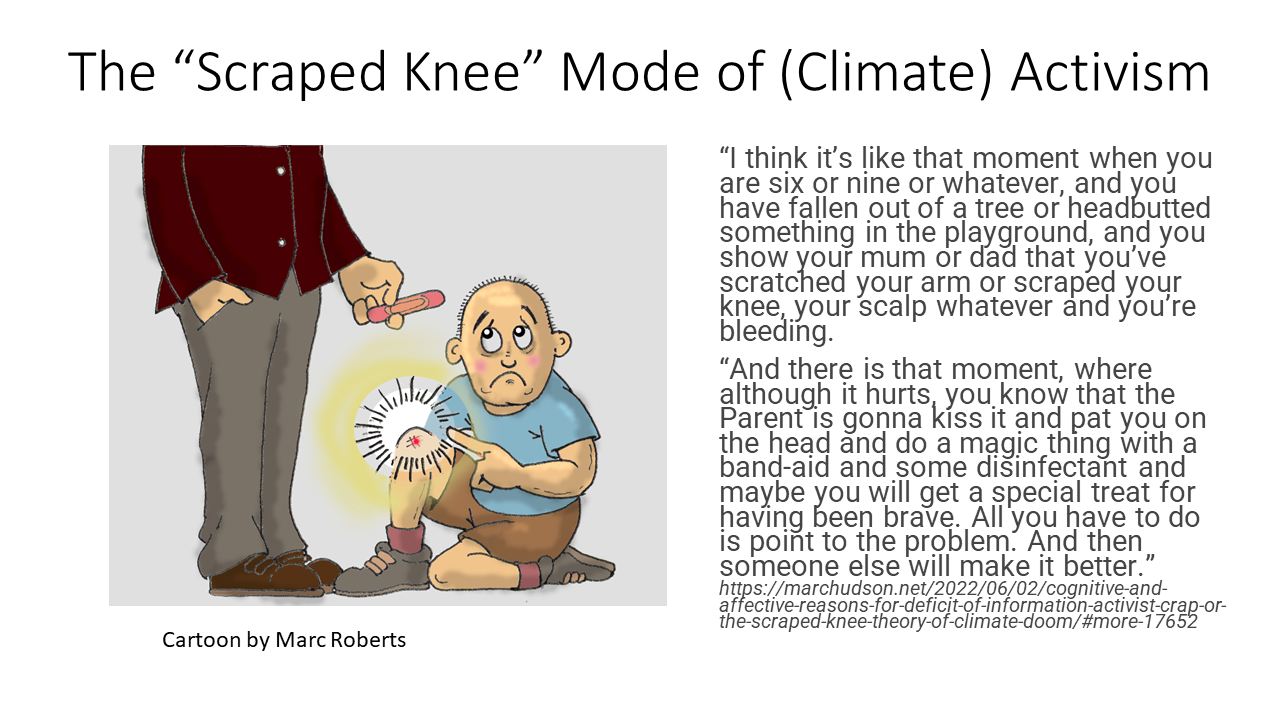
Those of us who do know it are stuck in various “praxis traps” and cognitive traps of our own making. We write excellent essays about our lassitude, our fatigue, and/or we throw paint at works of art in the hope of shocking “The Powers That Be” (state? Civil society?) into action – a version of what I have called elsewhere the “Scraped Knee” theory of activism.
When the soup-throwing (etc) happens, it acts as a kind of Rorschach test (the inkblots where you see what you want/need to see.”Immature alarmist narcissists blocking ambulances!” “Brave truth-tellers”.
Others use the events to have side-battles about the evils/idiocy of the State/Capitalism and its ecocidal trajectory. Arguing tossers arguing the toss. Everyone is confirmed in their own righteousness.
These events act not just as inkblot tests, but also “affordances” – they allow and disallow certain responses. The responses are along established, comforting lines. They DISALLOW/render harder OTHER responses.
The key thing they prevent (to most everyone’s relief) is a discussion of the failure of Western societies to take ecological limits seriously. 35 (well, 50) years of warnings, ignored. Fantasies of market or technological salvation instead. Failure.
The failure is that of parties, politicians, churches, unions, industry associations, social movements, academics (ESPECIALLY academics. Court jesters without the lulz). Failure to be honest, brave, persistent, clear-sighted. Failure to resist co-optation, repression. So much pain, shame.
The impossible failure humiliates us. We can’t face it, so we pick villains (and villains DO exist). This politician. That oil company. That craven professor. That astroturf group. ANYONE but OUR tribe. Hooray for our side. We are pure. We are good. We are the victim.
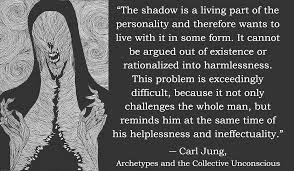
We are trapped tight in webs of complicity, futility, hate, anger, despair, self-loathing, narcissism (much of this encouraged, of course, by the machine, the juggernaut).
10 Conversations abt what to do differently – to have a vibrant rigorous, vigorous “civil society” response – would require us to already HAVE a vibrant rigorous vigorous civil society. If we had had that over the last 35 years (plus), we would possibly not be in such a god awful mess.
11. Final thesis – Activists have always tried to interpret and “win” (status, policy footholds, social changes) within the rules of the game. The point is to change it.
How? Who? Which herds of cats get belled by which mice doing what differently? FIIK.
Forty-seven years ago, on this day, October 1st, 1977, the first or at least ONE of the first, reports that frames climate as a national security threat is published.
Redefining National Security. Worldwatch Paper 14. OCTOBER 1977
Brown, Lester R.
This paper, an adaption from the author’s forthcoming book “The Twenty-Ninth Day: Accommodating Human Needs and Numbers to the Earth’s Resources,” deals with non-military threats to national security. Since World War II the concept of national security has acquired an overwhelmingly military character. The policy of continual preparedness has led to the militarization of the world economy, with military expenditures now accounting for six percent of the global product. Most countries spend more on national security than they do on educating their youth. The overwhelmingly military approach to national security is based on the assumption that the principal threat to security comes from other nations. But the threats to security may now arise less from the relationship of nation to nation and more from the relationship of man to nature. Dwindling reserves of oil and the deterioration of the earth’s biological systems now threaten the security of nations everywhere.
The amount of carbon dioxide in the air was roughly 334ppm. As of 2024 it is 4xxppm, but check here for daily measures.
The context was that everyone was beginning to say, CO2 building up is going to do things to agriculture, and so forth. What are the national security implications? We’d already had Kissinger talking to the UN General Assembly in 1974. So when a new upstart think tank called World Watch wants an angle to catch the attention of Washington DC insiders, then national security implications is not a bad bet.
What we learn is that the idea of climate hawks framing the issues in ways that are going to catch the attention and get past the “greenie hoax” shields of so-called important people has been around a lot longer than its proponents might want to give it credit for. And it has persistently not worked.
What happened next? World Watch kept watching the world as the world kept falling apart on its Watch. Watch watch? Such watch? as the famous as the comedy scene in Casablanca.
What do you think? Does this pass the ‘so what?’ threshold? Have I got facts wrong? Interpretation wrong? Please do comment on this post, unless you are a denialist, obvs.
Forty two years ago, on this day, September 20th, 1982
Look for a file marked “carbon dioxide – climate change” and perhaps to your amazement you will read in this publication details of Reagan’s two-day gathering titled Carbon Dioxide, Science and Consensus, September 19-23, 1982. President Reagan’s right hand man and head of his Carbon Dioxide Research Division, Frederick A. Koomanoff, started the meeting and wrote into the record and with President Reagan’s and Congress’ full backing ..
“The Executive Branch and the Congress clearly regard the CO2 issue as one deserving serious, sustained and systematic investigation. The credit for this lies in the good science and solid research that has and is being performed.”
Will the wonders of that man ever stop? Reagan’s right hand man wasn’t all, he came at the urgency of the CO2 crisis two-fisted when his left hand man chipped in with even more in affirmation of the joint executive and congressional commitment to work to resolving climate change. That left hand was James C. Greene, Science Consultant to the Congress’ Committee on Science and Technology and he was the whip at the meeting there to make sure the attending scientists were fully engaged with the urgency of this topic.
“A veil hangs ominously over the earth, from pole to pole, over all the continents, and over the oceans,” Greene noted, adding, “To a significant degree, man has put it there. It is called simply enough, carbon dioxide pollution. If today’s worst case scenario becomes tomorrow’s reality, it will be too late to reverse the atmospheric buildup or to ameliorate the severe adverse human and environmental impacts of this pollutant. However, if we quickly develop a sufficient research program to provide the necessary answers, there may still be time to rend the veil or at least keep it from reaching the dimensions of disaster. This is a major goal of the Federal carbon dioxide research program and it requires the cooperation of scientists, governmental officials, and the citizens.”
President Reagan through his carefully scripted right and left hand men urged the scientists participating in the conference to not merely be scientists but rather to become energetic advocates, as they revealed in the prepared statement,
“Involvement of scientists at all levels of public policy development is absolutely necessary if correct decisions are to be made — C.P. Snow expressed it best in his book Science and Government, when he wrote, ‘I believe scientists have something to give which our kind of society is desperately short of … that is foresight.’ That is why I want scientists active in all the levels of government. You must provide the information and the foresight — no one else can. The carbon dioxide issue is a case in point,” and then concluded, “Until recent years, scientists were not even certain if the carbon dioxide buildup would increase or decrease the Earth’s temperature. Now, the controversy is, what is of impact and how long before it will be felt worldwide?”
So Dear Republicans fellow countrymen and women of every sort, remember the teachings of one of your heroes who knew what was important and stop with the blustering nonsense. Yes I know that the cost of doing the right thing is today being spun into a spectacular trillion dollar budget figure and comes with a cabal of folks all too eager to be appointed bankers, or is that banksters, of that money but we have a solution to that carpetbagger problem.
The amount of carbon dioxide in the air was roughly 341ppm. As of 2024 it is 422ppm, but check here for daily measures.
The context was that Ronald Reagan was being a complete prick on all things environmental. Or rather the people who would put the meat-puppet Reagan into Office were being pricks, They had put James Watt and Anne Gorsuch in with the goal of destroying the Department of the Interior and the EPA. But these two asshats were making enemies too quickly and not making good results.
Someone came up with a bright idea of holding a conference which I know virtually nothing about- whose idea, what purpose what invite list but anyway, so I am speculating a bit.
What we learn. It happened and it probably acted as a safety valve so that some of the more right leaning willing to go along with whatever they were told for the sake of their careers type scientists could point to that event and say “it’s not entirely fair to accuse the Reagan administration of doing nothing.” These sorts of events or documents, useful earthing devices so that the buildup of static electricity can be dissipated harmlessly. Kind of like a lightning rod.
What happened next. Reagan continued to be an asshat, albeit an increasingly senile one (there were rumours that some around him were considering invoking the 25th Amendment).
What do you think? Does this pass the ‘so what?’ threshold? Have I got facts wrong? Interpretation wrong? Please do comment on this post, unless you are a denialist, obvs.
Thirty seven years ago, on this day, August 22nd, 1987, a conference took place in Canada, with the snappy title
Civilization and Rapid Climate Change, University of Calgary 22 – 24 August 1987. A short book “Thinking the Unthinkable” by Lydia Dotto emerged…
The amount of carbon dioxide in the air was roughly 349ppm. As of 2024 it is 424ppm, but check here for daily measures.
The context was that Canadians had been aware of CO2 build-up for a good 15 years, like everyone else (actually, it goes back to the 1950s, but only spottily). By the early 1970s, it was becoming more of a ‘thing’. By this time, probably the June 1988 Changing Atmosphere conference had been announced.
The person who acted as the rapporteur was Lydia Dotto, who had written a book about ozone. And, you know, the anthropologists and so forth were quite right when they said “don’t expect us to meet the challenge. That’s not who we are.” And so it came to pass…
What we learn is that before Thatcher and Bush, there were plenty of people saying, “watch out.” Not just climate scientists by the mid late 80s. It also had been that Canadian documentary and so forth. And they were keeping an eye on what was happening in the US. Carl Sagan Philip called the rest of it.
What happened next: Thatcher Bush and a generation of bullshit
What do you think? Does this pass the ‘so what?’ threshold? Have I got facts wrong? Interpretation wrong? Please do comment on this post, unless you are a denialist, obvs.
Sixty nine years ago, on this day, August 9th, 1955, Gilbert Plass submits a paper… You can read it here.
(Manuscript received August 9 1955
The amount of carbon dioxide in the air was roughly 314ppm. As of 2024 it is 424ppm, but check here for daily measures.
The context was that Plass had been talking, researching, writing about CO2 buildup for a while. He made public statements in May of 1953 [see my Conversation article], at the American Geophysical Union that went viral. And here he was submitting an article to Tellus, a Swedish academic journal. (Tellus was the watering hole for atmospheric physics those people at that time.)
What we learn is that smart people could see what was happening.
What happened next. Plass wrote that paper. He wrote another paper, I think, in 1959. And he also had an article in Scientific American in 1959. That, btw, was advertised in the Observer.
What do you think? Does this pass the ‘so what?’ threshold? Have I got facts wrong? Interpretation wrong? Please do comment on this post, unless you are a denialist, obvs.
Forty seven years ago, on this day, July 19th, 1977 , Stephen Schneider lays it out.
Appearing on the Johnny Carson Show on July 19, 1977 a year after the original release of The Genesis Strategy, Schneider responded to a series of questions regarding the ability of scientists to predict the weather more than a few days in advance, a prospect that – given his experiences with Kellogg and Smagorinsky early in his career – appeared entirely possible. Other conversation topics ensued, including issues of drought, whether the climate was cooling or warming, and even whether a recent weather fluctuation caused a serious black out in New York City. Given what appeared to be signs that society was increasingly sensitive to even small-scale environmental challenges, Schneider argued for building further resilience into society. “The laws of nature frequently are not in line with some of our laws,” he stated in an attempt to distinguish between natural laws – which are stable and enduring – and man-made laws – which tend to be short-sighted, sporadic, and clumsy. Everything in human decision making, he believed, is a trade-off between risks and benefits and therefore decisions require the incorporation of value judgments to maximize margins of safety in spite of existing uncertainties.55
Henderson 2014 Dilemmas of Reticence
The amount of carbon dioxide in the air was roughly 332ppm. As of 2024 it is 426ppm, but check here for daily measures.
The context was that Stephen Schneider was already well known because of his ice age prediction in 1971. He had just published The Genesis Strategy with co-author Lynne Merizow. Him being on Carson was a big deal, though. I think this is the first time he was on.
What we learn is that a small number of scientists were trying to communicate this stuff. early on.
What happened next: Schneider committed a faux pas by going off script and Carson never had him on again. Schneider kept being a public intellectual public figure. He was really good at what he did. RIP Stephen Schneider.
See also this excellent post – https://simpleclimate.wordpress.com/2014/01/04/when-the-climate-change-fight-got-ugly/
What do you think? Does this pass the ‘so what?’ threshold? Have I got facts wrong? Interpretation wrong? Please do comment on this post, unless you are a denialist, obvs.
We are, allegedly, in the midst of an “energy transition.” How very exciting! We are moving from dirty old fossil fuels, which are heating the planet, to lean clean green [fill in the blank – CCS, Nuclear, hydrogen, wind, solar, geothermal, grid-level batteries, perpetual motion machines] because we are a clever ingenious species interested in its own survival.
Apologies for the tone, but one of the things you see – if you’re a cynic who has read a history book, and/or lived through some history – is that we tell each other (and ourselves) stories we want to hear. Crucially, these stories then shape our perception, shape the way we select evidence to confirm these stories (1).
The ability to see this, to name it, and to try to compensate for it, is one of those “core skills” that many claim they have. But it requires not just competence, but also confidence and courage. Saying that the pretty story that people are lulling themselves with (and getting vibes, attention and cash from) is just a story, and that there are plot holes big enough to let a category six hurricane through, can be a risky business.
Michael Liebreich delights in punching holes in stories. Hydrogen was the subject of his latest effort. His lecture last Thursday was both brutal and hilarious.
Liebreich also co-hosts a podcast called Cleaning Up. The two obvious meanings are “making money” and “dealing with physical pollution,” but there’s a third (unintended?) meaning of de-mythifying, of clearing out the Augean stables of horseshit.
I got to thinking of horseshit. Not what the guest – Hans Eric Melin – had to say. He was crystal clear on what could and couldn’t be expected of battery recycling (from EVs, to grids etc etc). He also talked about the very persistent myth that only 5% of batteries are recycled/are recyclable. He explained where it came from, and how it keeps popping up. Listen to the podcast, and/or read him here on LinkedIn.
Tl:dr – the two sources of the myth are a Friends of the Earth press release and the abstract of a scientific paper (the claim not supported in the body of that paper!).
And what the 5% figure reminded me of was the Great Manure Crisis of 1894 (told you I was old).
“Late 18th century cities like London and New York seemed to be ‘drowning in horse manure’. In London, where the horse-carried Hansom Cab occupied the streets, 50.000 horses produced 570.000 kilograms of horse manure and 57.000 litres of urine daily. Together with the corpses of death horses, the urine and manure started to poison the city’s inhabitants. In 1894 the Times predicted that “in 50 years, every street in London will be buried under nine feet of manure.” The situation came to be known as the ‘Great Manure Crisis of 1894’ [source, and see here too].
Role of myths in transitions
Generally, we like to tell stories. They make us feel like we are in control, or – failing that – that we will be less surprised than other people when surprising/uncontrollable things happen.
This energy transition that we are going through (kinda sorta) is scary, disorientating, and discombobulating. Expect loadsa stories. especially from people who want your money.
Meanwhile, we like to hear stories – to scare ourselves with the bogey-man (mountains of horseshit will crush us!!). This is something you see especially in the 1970s disaster novels (ecology and/or technology running amok) that I read compulsively (2).
If you tell stories about how technological innovation X, which is necessary for the “transition” is impossible (“batteries aren’t being/can’t be recycled”) you look like (3) the grown-up in the room, the person who is not a gullible rube taken in by all the hype (4).
And so, the myths persist, with new factoids (67.4 percent of statistics are made up on the spot) and anecdotes (its plural is not data) sprinkled on top.
But also, and I cannot emphasize this enough, the Cocker Protocol.
Footnotes
And if anyone tries to tell you that academics are partially or entirely immune to this tendency, you have my permission to laugh in their faces.
The 1970s were the time when Whitey stopped being in charge in the way he had been for hundreds of years. The techno-eco-disasters are in part a way of working through that loss of primacy. But also, giant ants are fun.
In your own eyes. It turns out other people don’t always share our opinions of ourselves. Who knew.
There are also pleasures in being the reply guy, the concern troll, but that can be for another time.