Sixteen years ago, on this day, August 31st, 2010,
AUSTRALIA is failing to meet its international responsibilities by delaying the introduction of an emissions trading scheme, Mike Rann said yesterday.
After staying clear of ETS issues in the federal election campaign, the South Australian Premier told an Adelaide business lunch an ETS was urgently needed to spur international action on climate change.
“Only an emissions trading system allows the country to commit to a specific emissions performance and be assured of achieving it,” he said.
Akerman, P. 2010. ETS delay a national failure: Rann. The Australian, 1 September.
The amount of carbon dioxide in the air was 390ppm. As of 2026, when this post was published, it is 430ppm. This matters because the more carbon dioxide in the air, the more heat gets trapped. The more heat, the more extreme weather events. You can make it more complicated than that if you want, but really, it’s not. Fwiw, I have a tattoo of the Keeling Curve on my left forearm.
The broader context was that, as per a couple of days ago, the first attempts to get a price on carbon were for a tax. After these were defeated, especially in 1995, attention had turned to an emissions trading scheme. In August 2003 the second attempt to get a trading scheme going under the Howard government was defeated.
Thespecificcontext was that Howard’s entire cabinet was united in the need for one. Howard blocked it for a month and came back, and then said “no”, and the spineless cretins all went along with it. Here we see South Australian Premier Mike Rann, who by this time had been taking a keen interest in renewables and the potential for South Australia to generate a lot of electricity from wind entering the fray; Rann had become premier of South Australia shortly before this.
What I think we can learn from this is that the opportunities, the technologies, the policies were all there, and if they had been implemented, they would not have stopped climate change. They would have slowed down the staggering increase in our emissions. They would have slowly, perhaps, bent the concentration curve down a bit, which might have bought us more time. These catastrophes that we’re facing might have been delayed by as much as I don’t know a decade?
What happened next In 2006 Howard had to do a U-turn in the face of public and political pressure. It did not save him. Labor’s Kevin Rudd then managed to fuck up the emissions trading scheme legislation and was replaced by Julia Gillard, about whom you can say many things, but she was at least competent within her framework. You cannot say that of Rudd.
On this topic, you might like these other posts on All Our Yesterdays
Xx
References
xx
You can see the chronological list of All Our Yesterdays “on this day” posts here.
What do you think? Does this pass the ‘so what?’ threshold? Have I got facts wrong? Interpretation wrong? Please do comment on this post, unless you are a denialist, obvs.
If you want to get involved, let me know.
If you want to invite me on your podcast, that would boost my ego and probably improve the currently pitiful hit-rate on this site (the two are not-unrelated).
In what follows, I explain what’s a COP – hopefully telling you some things you don’t already know, offer a history of South Australian awareness of climate change, and then make some brief idle speculations on how Adelaide’s bid might fair – could it do a Bradbury?
Oh no, it’s the COPs!
COPs are the “Conferences of the Parties.” While there are plenty of parties at COPs, in this case the “parties” refers to the countries (almost the whole world) which have signed up to the UNFCCC;, which was one of the international treaties signed at the pivotal “Earth Summit” in 1992, held in Rio de Janeiro.
The first COP was in Berlin in March-April 1995 (a young Angela Merkel was a key player). There have been 28 since, and COP29 is starting today, in Azerbaijan
The basic problem is that the original treaty never specified targets and timetables for emissions reductions by rich countries. The French and most European countries were keen, but Uncle Sam said “nope. Do that and we won’t come.”. That has meant a series of efforts to get emissions cuts agreed – Kyoto 1997 (agreed, but USA and Australia pulled out), Copenhagen 2009 (ended in tears and little else) and Paris in 2015 (warm words, no teeth). In the meantime, the burning of oil, coal and gas has soared. This means that the amount of heat-trapping greenhouse gases in the atmosphere has gone way up (and is increasing faster and faster, as the things that take carbon dioxide out of the atmosphere give up the ghost – or as the scientists call it – ‘sink failure’).
Of course, by the time Adelaide finds out if its bid is successful, the whole COP circus might be grinding to a halt, if Donald Trump repeats what he did last time round, and withdraws from negotiations.
Why Adelaide?
Anthony Albanese announced that Australia would bid to co-host COP31 with South Pacific Island nations in November 2022 (giving up on the idea of hosting it in 2024)]. It isn’t automatically capital cities that host the COP. For example when the UK hosted in 2021 Glasgow got the gig in any case. Let’s start with the obvious reason why Adelaide might not succeed; it’s not on the Pacific Coast. However, unlike Sydney and Brisbane which are, Adelaide is not the capital of a state with an enormous coal export industry that has enraged the South Pacific Island states – “awks” as the kids used to say.
A history lesson
South Australians have always known that the weather matters, and is unpredictable. Go north of the Goyder line and you’ll see the abandoned buildings of those who thought they could buck the system. Over the last 55 years though, awareness has grown of man-made problems.
In March 1970 a newly-elected Labor politician, Richard Gun, referred to carbon dioxide build up in his maiden speech (see this article on the Guardian website by Royce Kurmelovs).
In July 1970 as alarm at “ecology” (as it was then called) reached an early peak, a group of business leaders at an Adelaide luncheon were told the following
“And so the sprawling city, the maimed country, and even the air we breathe and the sea that gives us life, combine into what can only be described as a coming nightmare unless we as a people are prepared to become violently Australia-conscious and to replan, decentralise, preserve, prohibit and police. We won’t correct the situation unless first as individuals and secondly as a nation we are prepared to think, to take care and to spend money.”
But this was not a protestor who’d stormed the stage. It was in fact Bede Callaghan, managing director of the Commonwealth Banking Corporation
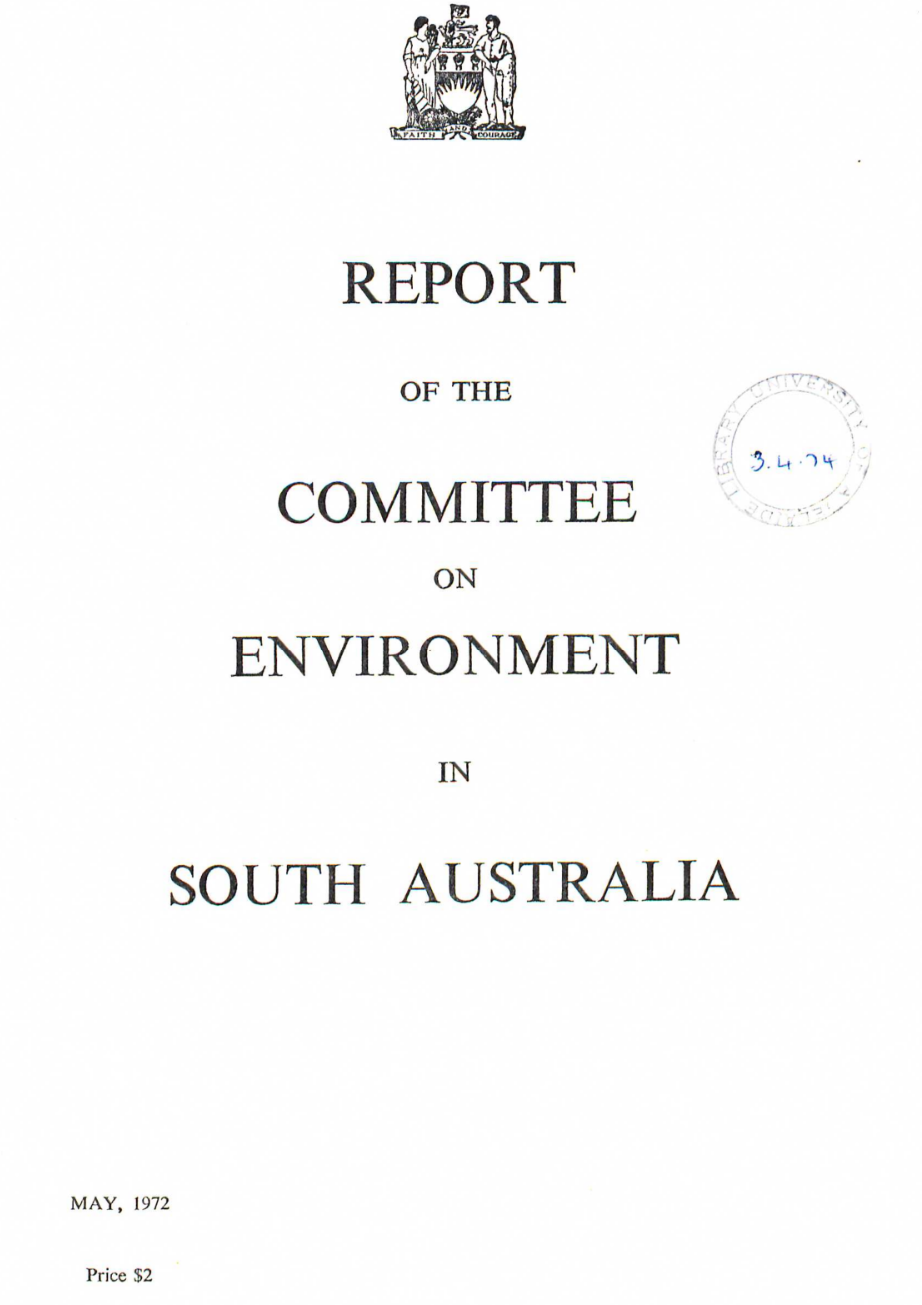
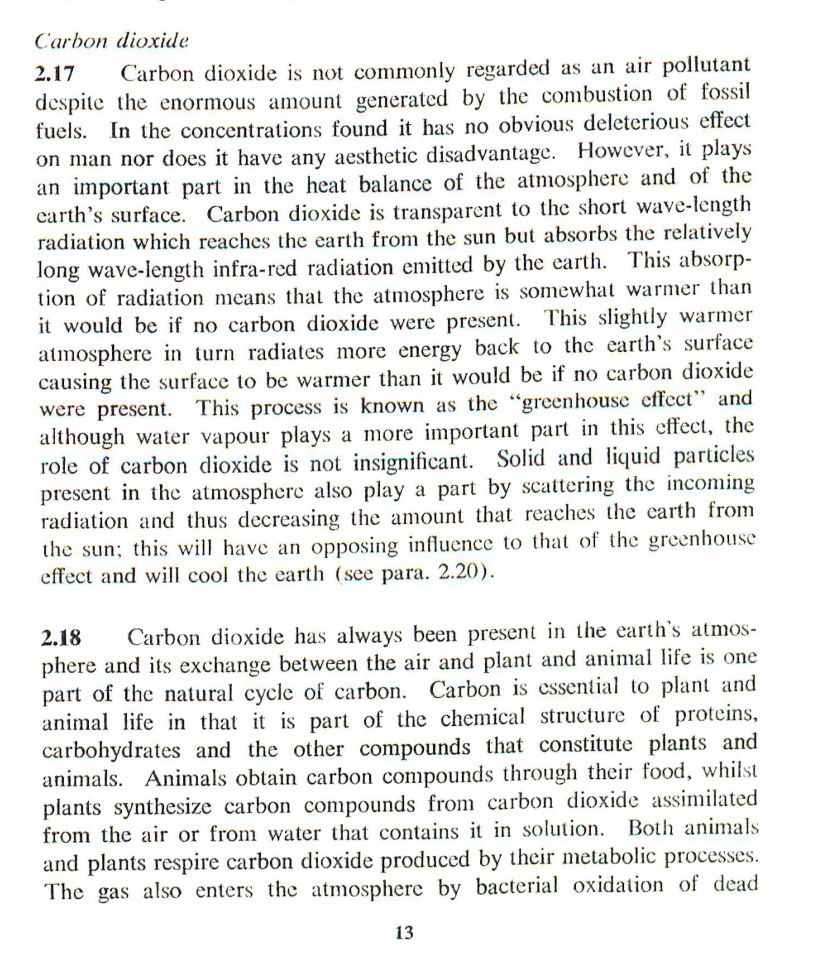
Already in February of that year the Liberal government of Steele Hall created a committee (of course!) on the environment. It held hearings and in May 1972 produced the “Jordan report,” which included a mention of C02, though largely a dismissive one.
And yes, it included a section – albeit understandably equivocal – on carbon dioxide.
A South Australian senator, Don Jessop mentions it in Federal parliament, in November 1973
“It is quite apparent to world scientists that the silent pollutant, carbon dioxide, is increasing in the atmosphere and will cause us great concern in the future.
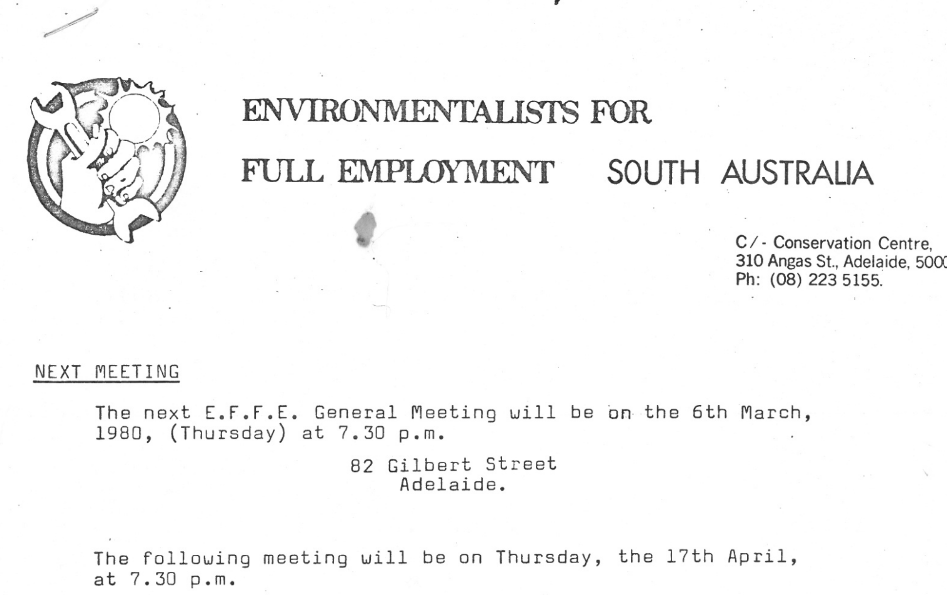
And while the warnings and alarms continued through the 1970s and 1980s, with visiting professors (including pro-nuclear ones), ABC documentaries, CSIRO documentaries, and mentions of the problem by groups such as Environmentalists for Full Employment.
It is fair to say that policymaker awareness only took off in the second half of the 1980s.
In 1985 atmospheric scientists met in Villach, a city in Austria. They realised they had underestimated the impact of gases other than carbon dioxide, and that the heating they had expected to arrive in several decades was likely to come much faster. They left Villach determined to warn policymakers. The Australian result of this was that CSIRO started briefing politicians, including the Australian Environment Council. After its June 1986 meeting, South Australia’s environment minister, Don Hopgood, went public with a stark warning about sea-level rise,
The following years saw a flurry of scientific and public/political conferences, promises, exhortations and committees, all about “the Greenhouse Effect.” Internationally this culminated with the climate treaty in Rio in June 1992. South Australia had set up committees and programmes, but all this was basically swept away with the disaster of the failure of the State Bank of South Australia, Premier John Bannon’s resignation and the enormous defeat Labor experienced. The incoming Liberals paid lipservice at most, finding it easier not to kill anything off officially but let it instead die by neglect.
Climate change played little part in the debates over electricity generation that took up the second half of the 1990s. However, a determined group of policy wonks were beavering away, keen to promote renewables and action on climate. The return of Labor in 2002 was a turning point. The first (tiny by today’s standards) wind farm went live the following year. Over the years, Premier Mike Rann skilfully found wiggle-room as the Federal government was forced to continue to offer policy support. As Tristan Edis put it in a 2014 article
“The way it works is SA public servants assess the likely amount of renewable energy that will be installed in the state within the next few years as a result of the federal government’s Renewable Energy Target. Then, the South Australian government take this projection of what will be achieved under business as usual a few years from now, and duly claim it as an ambitious target that they are setting for themselves, but push out the year a bit so they claim they’ve reached it ahead of schedule.”
But Rann had been attending to the broader cultural issues as well. He invited US climate scientist Stephen Schneider to be South Australia thinker in residence in 2006. Schneider’s message – that the Millennium Drought was a harbinger of problems to come and we’d better get preparing now, resonated.
The next Labor Premier, Jay Weatherill, accelerated Rann’s trajectory. The 2016 blackout was perhaps pivotal. Two events stand out – First, Weatherill dishing it out to Federal Environment Minister Josh Frydenberg and the latter just having to take it.
Second- the big battery of Elon Musk, back when progressives could look past some of his, shall we say, foibles.
By the time Labor lost power, the energy transition had such momentum – and powerful people making money from it and popular support, that the state Liberals basically ignored their Federal counterparts.
Labor has returned to power, with even bolder targets. It seems now somewhat starry-eyed about hydrogen, and alarmingly willing to do whatever Santos wants, before being asked.
What will happen?
Who knows? I’ve learned not to make confident predictions about anything other than “higher concentrations of carbon dioxide in the atmosphere next year.”
We will all find out in a couple of weeks. Will Edis v2.0 work? It already has in once sense: Win or lose, Adelaide raises its profile and plays the ‘inward green investment’ vibes game. It’s a smart move from a political party that has shown alertness to the opportunities national and international policy games present niche actors.
“The South Australian Government established an interdepartmental committee on climate change… to prepare a strategy addressing the greenhouse issue. The Committee’s first report, `Implications of Climate Change for South Australia’, was released in August 1990 and described the possible impacts of climate change.”
It doesn’t. But I am from South Australia. So, call it a self-indulgence. These sorts of committees and “strategies” were dime a dozen in 1989.
What happened next?
There followed a hell of a lot of talking, not really much doing. But through the 2000s and into the 2010s South Australia – under the canny stewardship of Labor premiers Mike Rann and then Jay Weatherill, managed to leverage the various renewable energy targets that Howard hadn’t managed to kill off.
South Australia managed to make use of its land and wind and start to properly decarbonise its energy sector. Housing and transport and food? Well, not quite so much. But we shall see…
btw, on this day the PPM was 351.84 ppm. Now it is 421ish- but see here for the latest.